Deadlines:
- Monday 12 March: Tutorial AR
- Monday 19 March: Tutorial DK
- Monday 26 March: Exploratory Project - Challenges and Learnings - Seminar
- Monday 23 April: Group Crits 1/2 cohort
- Monday 30 April: Tutorial AR
- Finish: 11 May upload images by 24.00 for group evaluation and seminar on 14 May
- Monday 14 May: Exploratory Project Seminar / evaluation
- Monday 4 June: DEADLINE FOR PRACTICAL WORK SUBMISSION - End of unit review AR/CW
AimEncourage greater speculative and experimental approaches to visual research and making.Emphasis on risk taking, risks that are personal to you. Curiosity and suspension of your usual judgement are crucial. Reflect carefully.Choose an area to explore that will challenge you.You may need to change your plan as you go along.Not expected to produce fully resolved work;The quality of the exploration is key.Outline Project PlanUsing the structure below, produce an outline project plan to be discussed in tutorials on 12 March and uploaded to your MA journal:
- What are your starting points? – be specific
- What am I thinking about?The fundamentals of the Everyday - to date practices has addressed a concern for the decay of social decorum and the prevalence of neglect for the Everyday. - systematic disintegration leading to encasing the chaos in a confined space. How is communication and daily practices affected in environments where these vary due to cultural expectations? Is this discord accepted and how?Looking at: the bourgeoisie and their elevation from the everyday. Does this elevation exists today: does status or wealth create a simplified routine?; what are the commonalities and differences according to sociocultural factors?; or are the basic components of living so intrinsic that routines are fundamentally equivalent? Lefebvre, Rhythmanalysis creates a science of analysing daily rhythms, inherent in my work. How do the rhythms of daily experience filter in to art? how has this shown up historically? how this affects artists and the current market?Whitewashing, genre, inherited genres (gender, race, age, class), control, space, confinement, touch, personal space, routine, space of routine, repetition, chaos, fragmentation...
- What are you curious about?
- What am I reading, what is drawing me in? What artists am I curious about? What materials am I curious about? What techniques do I want to explore? Currently reading on Colonialism, deconstructing Colonialism, post-Colonialism, Orientialism, 'whitewashing', the narrative of history, identity politics; these subjects specific to the gulf or UK 'commonwealth' - that term in itsself. Coexistence and intergroup cooperation. Transience, permanent impermanence, 'migrant, expat, national'. Time and consumption of time in routine. Routine, culture and place. Negotiation of routine, time. The chaos of routine, how routines are shaped, deconstructed and reconstructed. Textiles and routine, domesticity, the sense of touch and everyday life, pattern, repetition and fracturing/fragmenting.Artist in the region, looking at pattern, similar concepts, or materials? Whats more important to my practice? Can I find artists that come under all of those headings? Do I use contemporary artists, peers? or art historical references? Do they need to be highly successful or can they be emerging?Books, layers, lines, disruption, neutrality, binary, repetition, paper, paint, wet, dry, encrusted, texture, touch, comfort, weight/wait, time passing. fabric, stitch, fragility, density, opacity, fibre, cloth, natural/degradable, dissolvable...
- What strategies will you adopt?
- How Am I going to do this? Be structured and methodical, keeps clear notes - probably best to use this platform so it's in one place. Feel self conscious about that but can use passwords. Keep to the timeline, reference it regularly, make a time planner to map out slots during the weeks to accommodate each task for the course and other commitments. Thank goodness reading groups end this week! Photograph, document, upload, repeat...
- What are your personal risks?
- What scares me? Is it practical risks, theoretical risks or personal/private risks? This scares me... being distracted. Not producing enough, not understanding or misinterpreting the task or feedback. Underachieving, I know what I am capable of but seem to hold myself back, becoming self critical and apprehensive until I give up as it feels like the safest option. Comparison scares me, wanting to achieve and understand things in the manner of my peers.
- What challenges do you anticipate?
- Time, organisation, overwhelm, distraction, feelings of imposterism, insecurity, comparison, fear.
- Plan an outline programme over 13 weeks; build in time for reflection and evaluation:
- Week 1 Feb 18th Complete Mapping the territory, print large scale mindmap to work in to, use to outline concepts, generate ideas and moving forward. Produce outline plan first draft, produce some experiments regarding initial thoughts from current practice.
- Week 2 Feb 25th Begin research reading and gathering, use Textile reader (Hemmings, 2012) and Everyday Reader (Highmore, 2002); texts related to touch, histories, colonialism, colour, routine, textile usage. Explore artists already working around my exploration (also links to contextual study). Continue production experiments, break process down and source materials.
- Week 3 Mar 4th Reflect on current production, note relationship to readings, additional areas to explore or possible changes in direction etc.
- Week 4 Mar 11th Continue with production, once each moment of production is 'completed' as such, reflect immediately to stay on top and also revisit and compare with previous productions - Mon 12 Mar: Tutorial AR
- Week 5 Mar 18th Be aware of burn out or possible stopping points, challenge with an activity from the list provided to move work in to another dimension/area/scale/technique. Mon 19 Mar: Tutorial DK ART WEEK DUBAI
- Week 6 Mar 25th Production, again being aware of reflection, and managing the other course commitments, refer to course-mates for progress and feedback, communicate strengths and weaknesses and possible areas for consultation Mon 26 Mar: Exploratory Project - Challenges and Learnings - Seminar
- Week 7 Apr 1st HALF WAY POINT good time to review the current body of work, what is successful and what isn't. Can anything be 'rescued' or needs to be cast off? is it fulfilling the initial concept and ideas? Does it need to? Has it produced new ways of thinking? Changed direction? What unexpected things have emerged? Have I challenged myself? Does this still feel safe? How can I take even more risks? Prepare for making day. Create a list of questions to pose to group for structured and meaningful feedback. Sat 7th Apr: Making Day
- Week 8 Apr 8th Production, again being aware of reflection, and managing the other course commitments, move forward using findings and feedback from making day.
- Week 9 Apr 15th Production, utilise activities list if stuck or needing an extra challenge. Prepare for Group crit next week.
- Week 10 Apr 22nd Production, self reflection and future planning. Prepare for tutorial with AR next week Mon 23 Apr: Group Crits 1/2 cohort
- Week 11 Apr 29th Production, again being aware of reflection, and managing the other course commitments, move work forward using critique from tutorial Mon 30 Apr: Tutorial AR
- Week 12 May 6th Reflection and assessment of progress, prepare for group evaluation, clarify thoughts and findings, plan for future development of practice Finish: 11 May: upload images by 24.00 for group evaluation and seminar on 14 May
- Week 13 May 13th Deadlines for contextual study and PPP, thinking about submitting work for assessment, evaluate progress and outcomes. Mon 14 May: Exploratory Project Seminar / evaluation - Mon 4 Jun: DEADLINE FOR PRACTICAL WORK SUBMISSION - End of unit review AR/CW
- Meet in a small group at least twice throughout the project. MZ, RF, KVW - GCC collective (although that is an actual collective that exists so may need a new name!)
Suggestions for Activity from project brief:
- immersing yourself in a subject or narrowing your subject
- breaking a habit or acquiring a habit
- generating lots of visual ideas from one source or trying the same idea again and again
- changing scale, mass, speed, volume, orientation
- moving into colour or moving into monochrome
- testing materials or learning a new technique
- using drawing or photographs of existing work to rework pieces
- combining, juxtaposing or sequencing existing work
- encouraging ambiguity, taking risks, doing something open-ended, pushing a piece of work as far as you can
- collaborating with someone or something else
- responding to an artefact or archive
- producing a series of experiments
- constructing work from multiple parts
- exploring collapse and disintegration
- borrowing strategies from other fields
Project evaluation Use the following to structure your evaluation in your MA journal, feel free to amend or add categories/questions. What did you discover?What went well and why? What did not go so well and why? Comment on what have you learnt about:
- Your making and thinking process
- Your use of resources
- Your capacity to take risks
- How you cope with problems and challenges
How will you use what you have learnt in the future?You will be asked to share your experience of this project in one-to-one conversations with others in the group.
 Using a scrap length of muslin, the cloth I favour due to its transparency, I taped to the largest image and utilised various colour markers to trace out the different fractured patterns. This is prep of density embroidery testing.

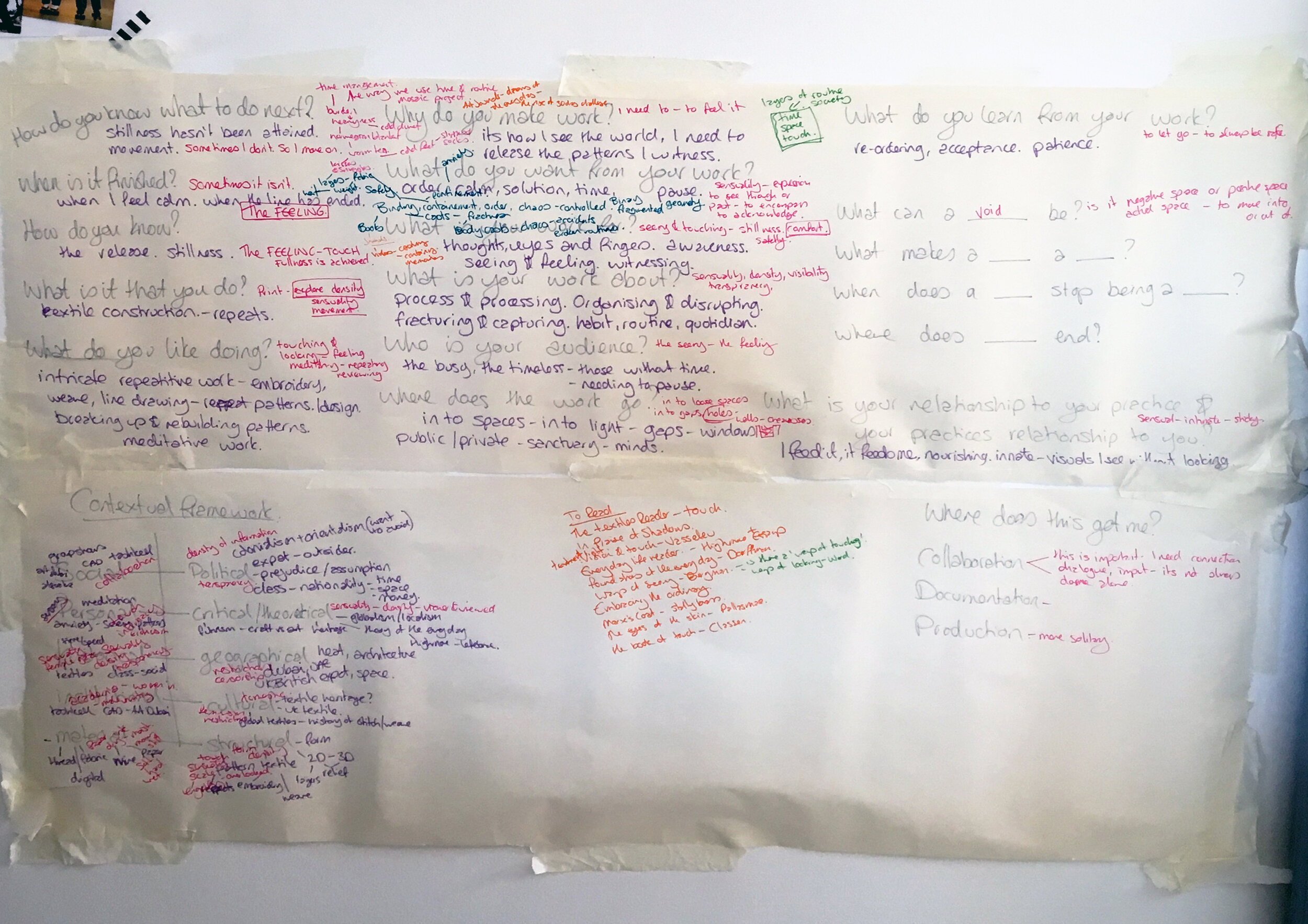

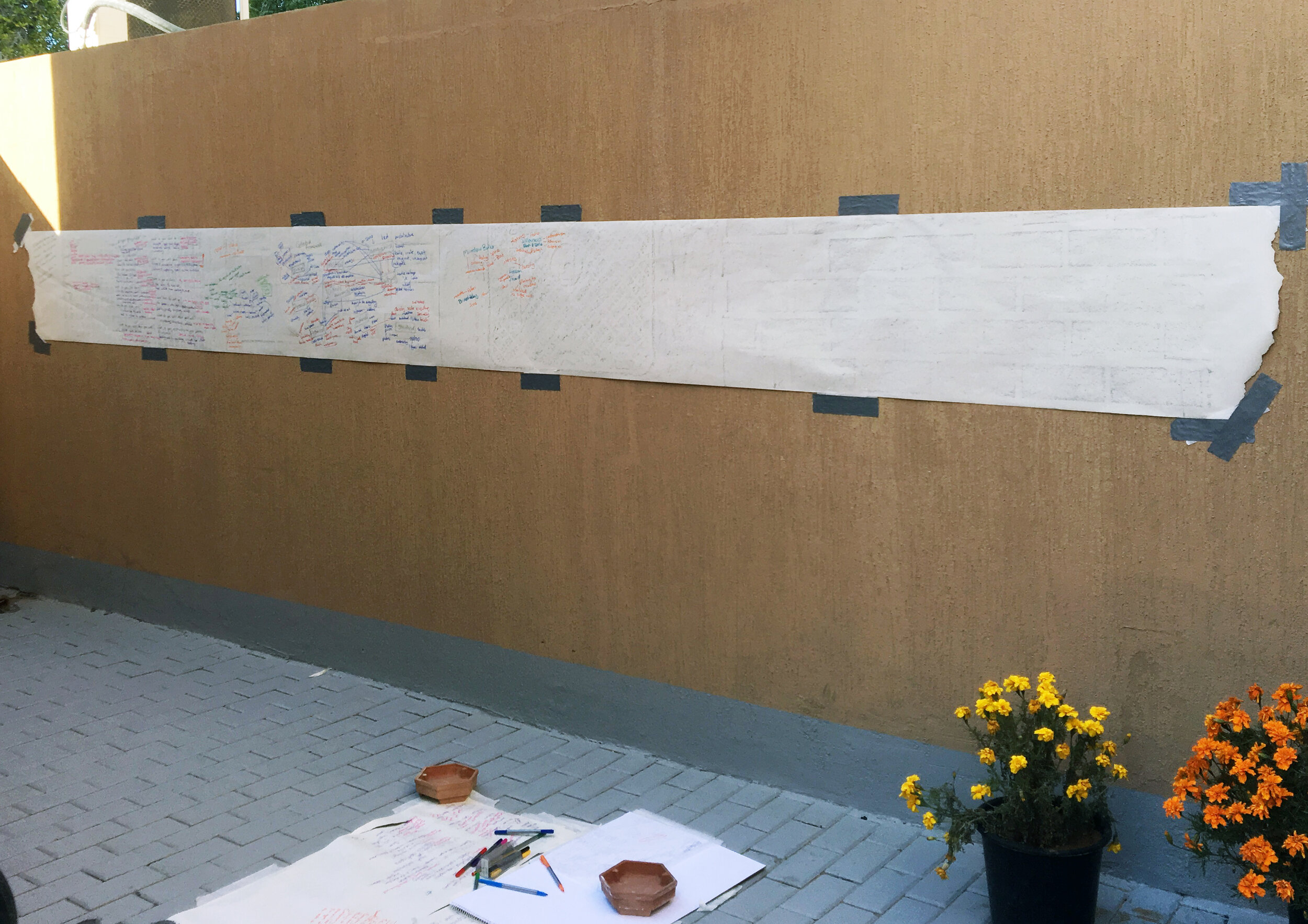


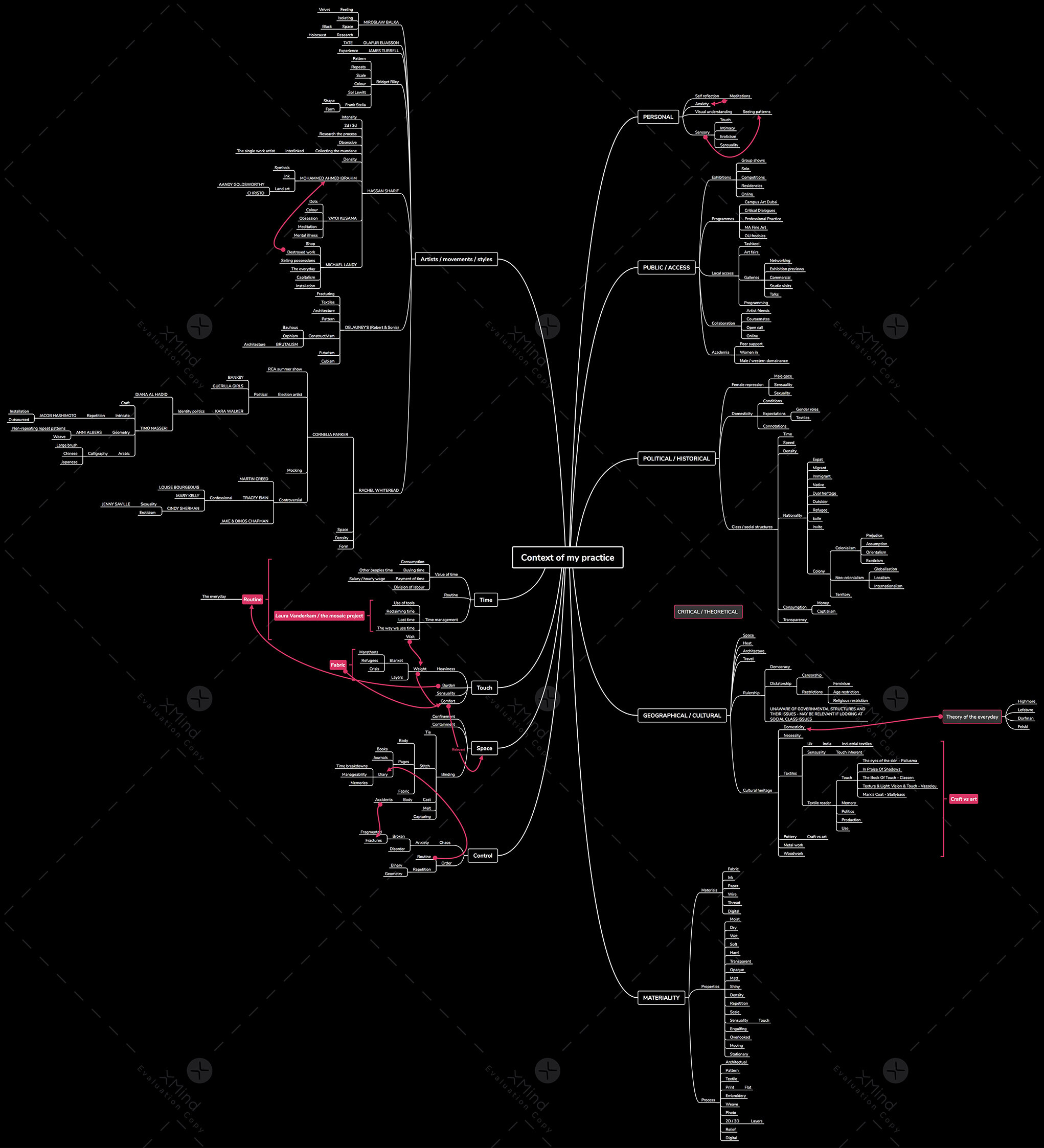

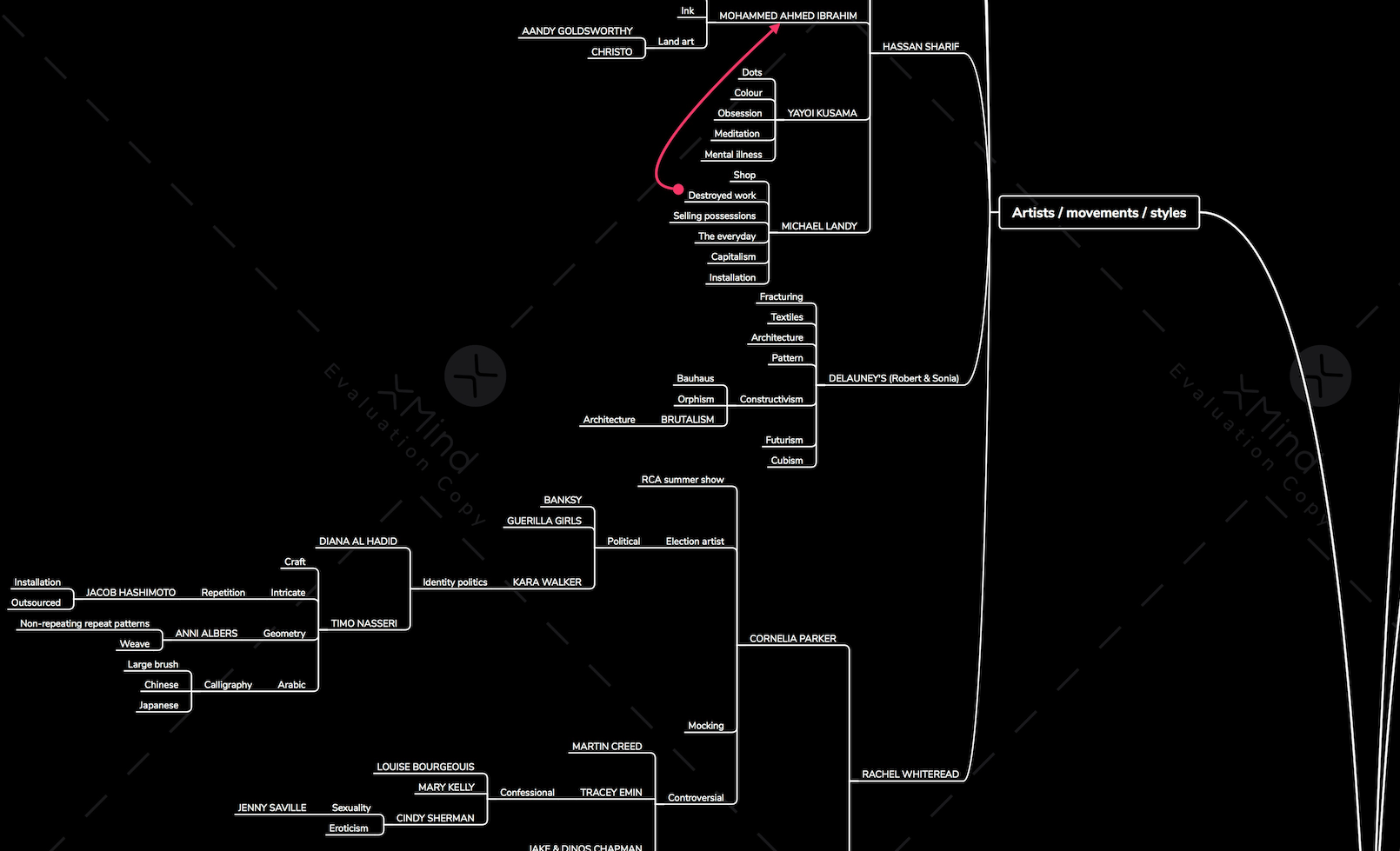
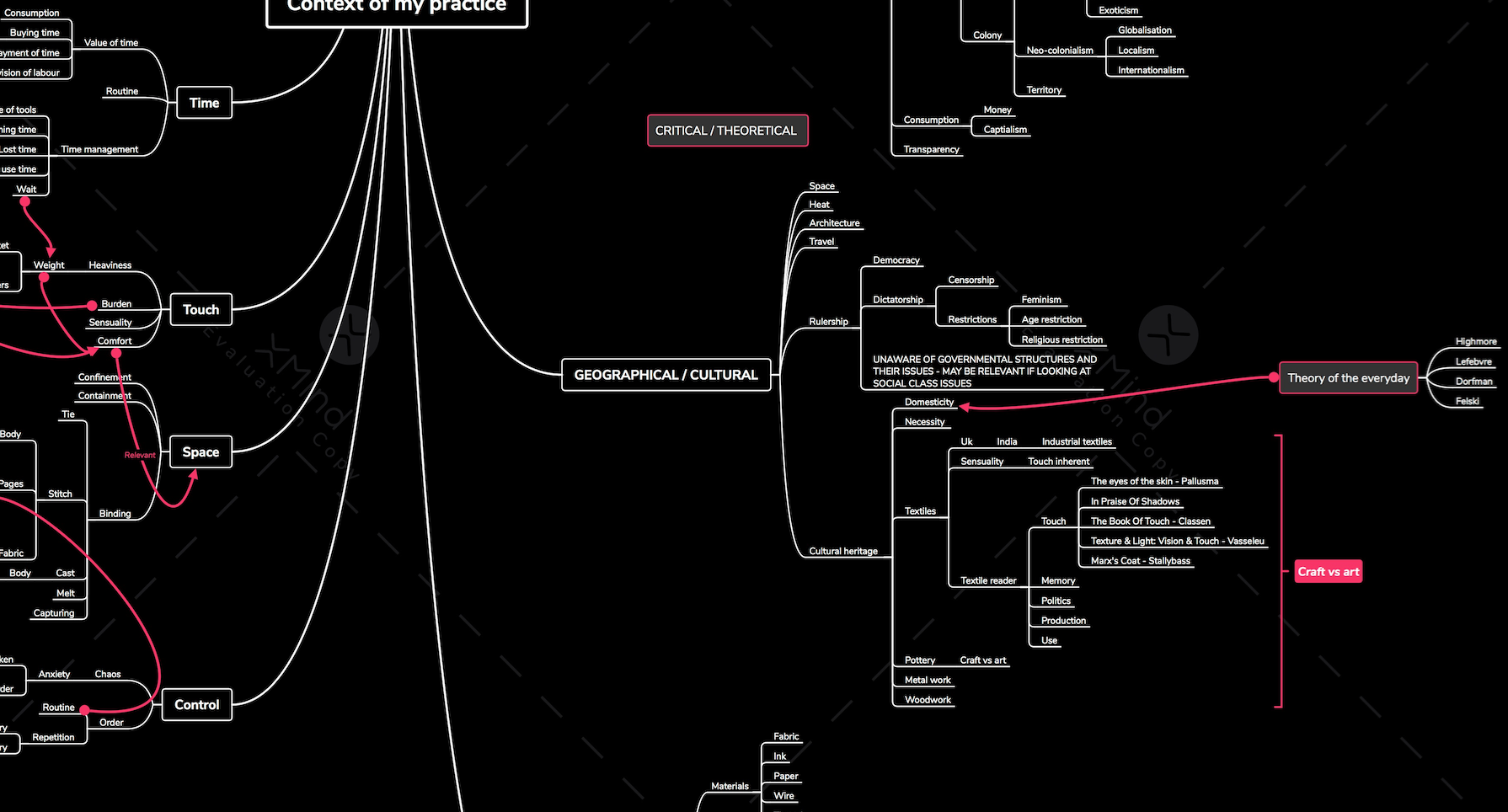


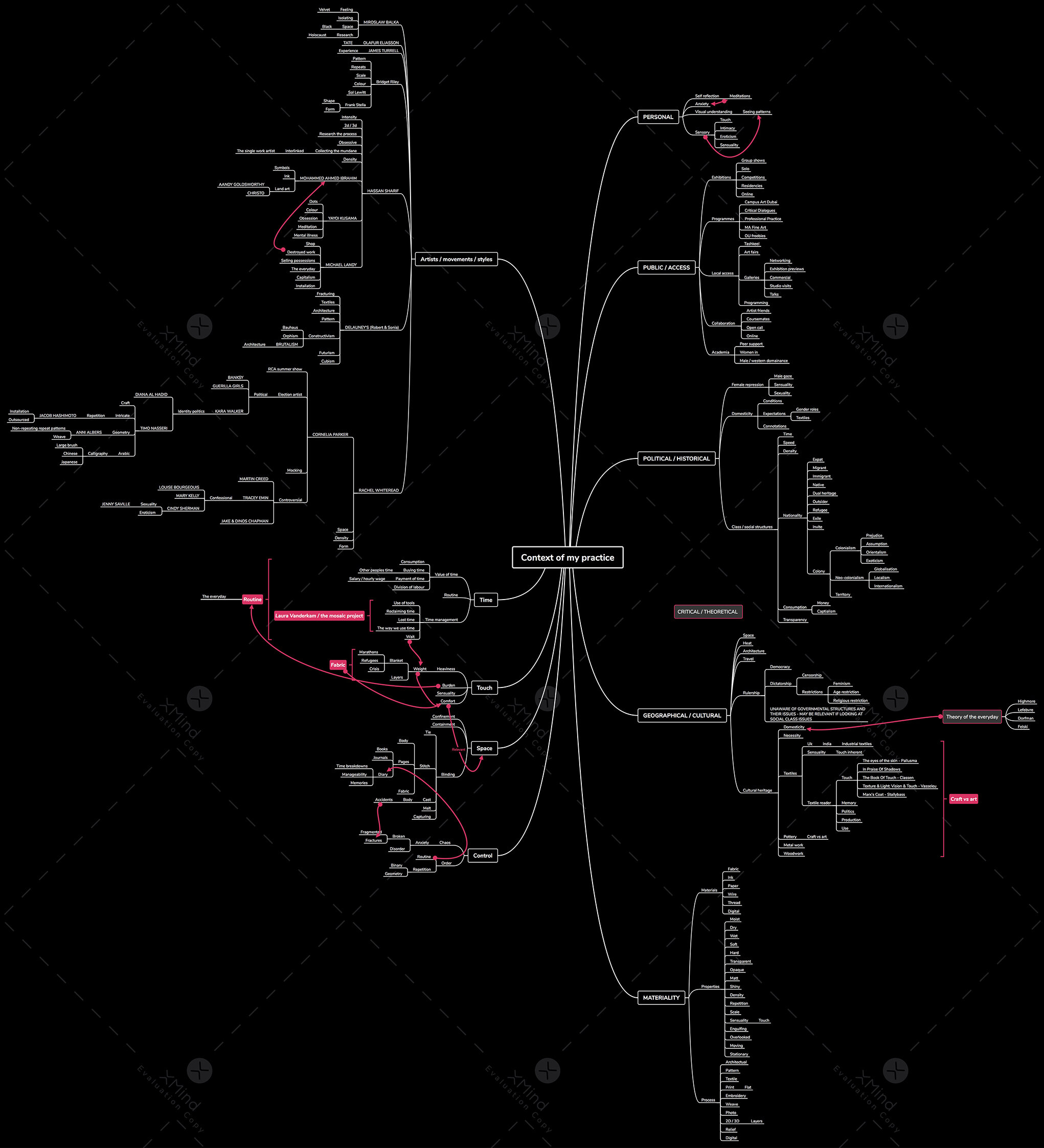


 Using the tracing paper have another aspect to note taking, allowing them to literally overlap and intertwine.Below are the individual pages, scanned and manipulated to show contents clearly.


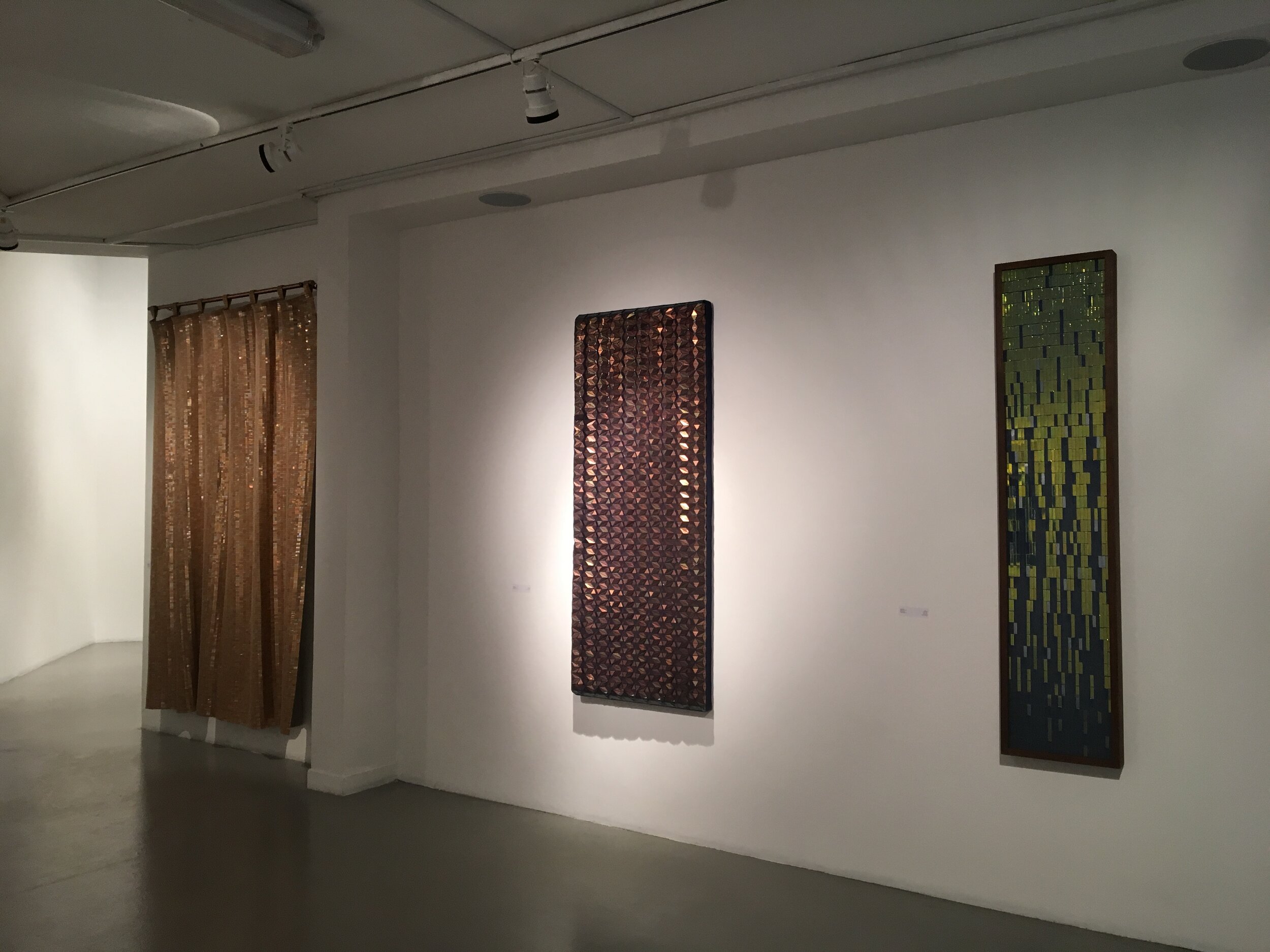
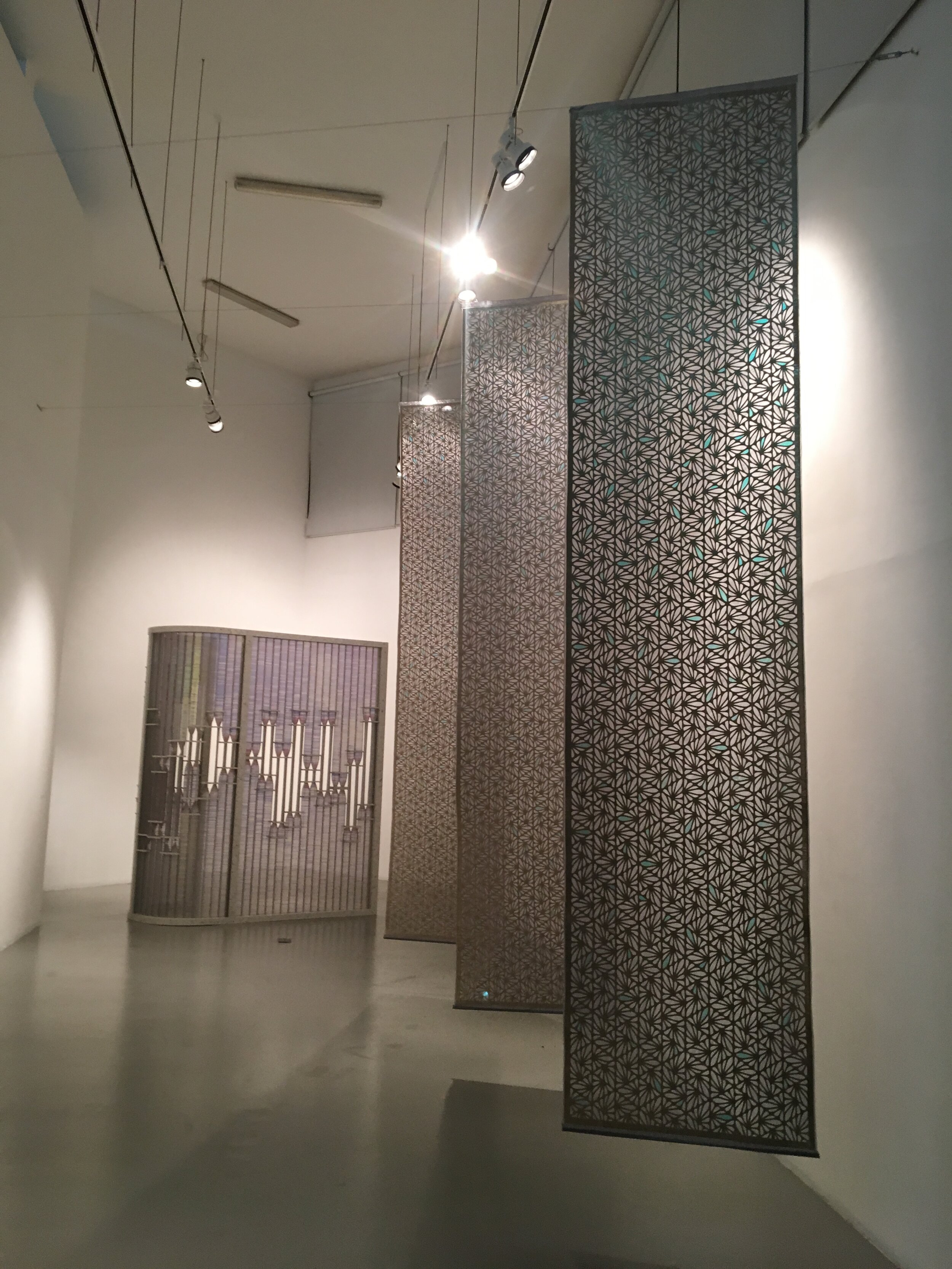

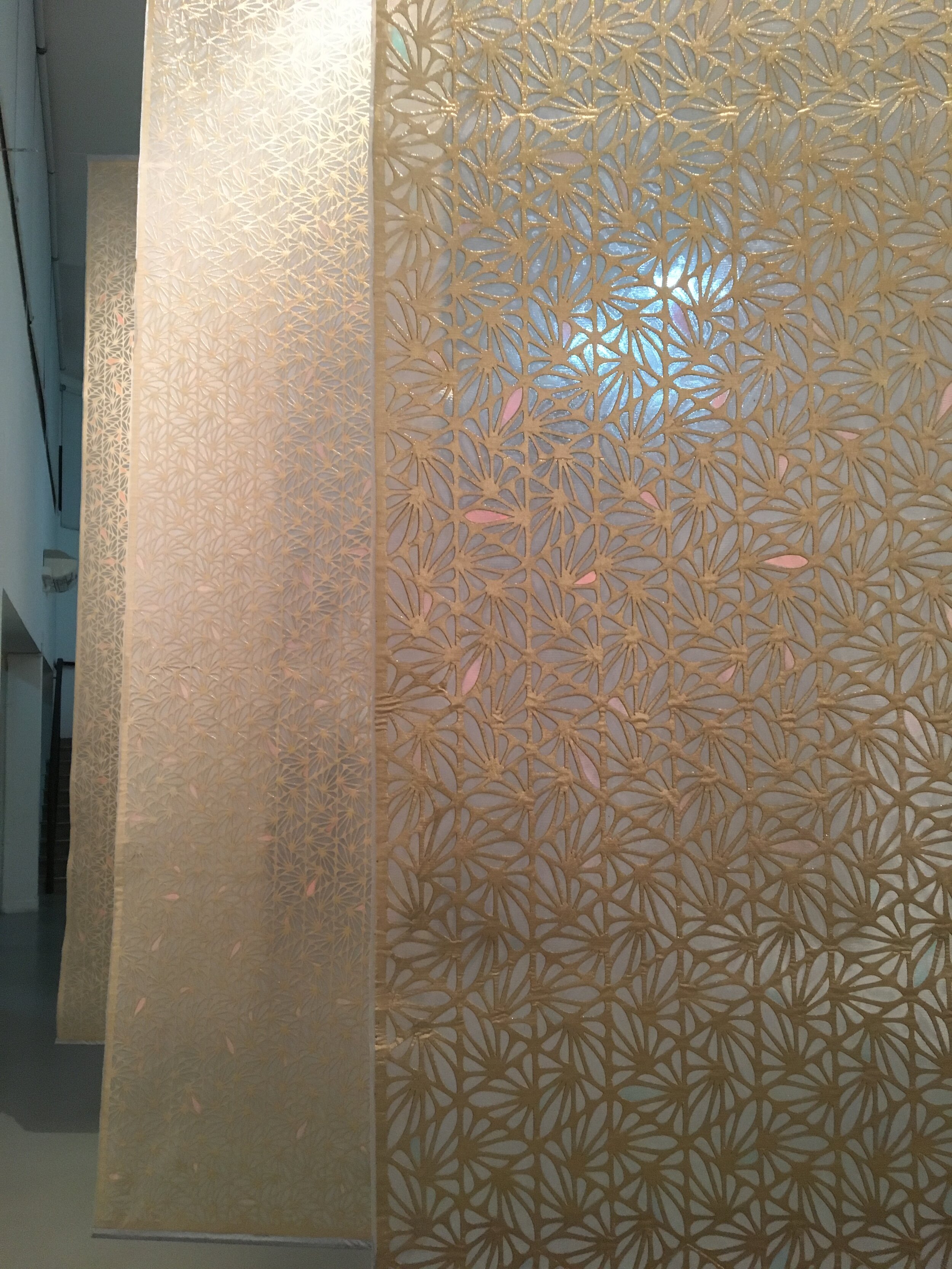
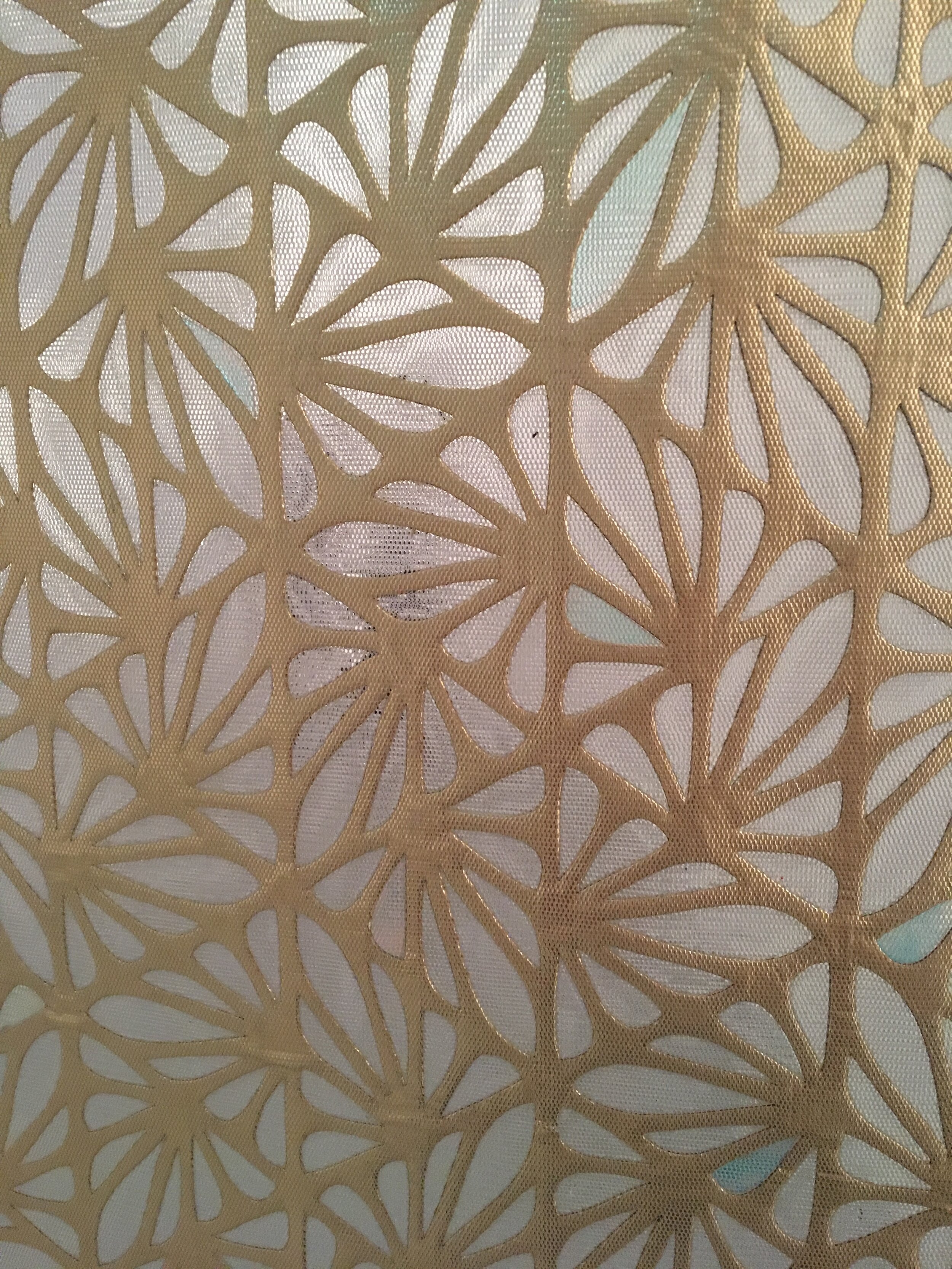
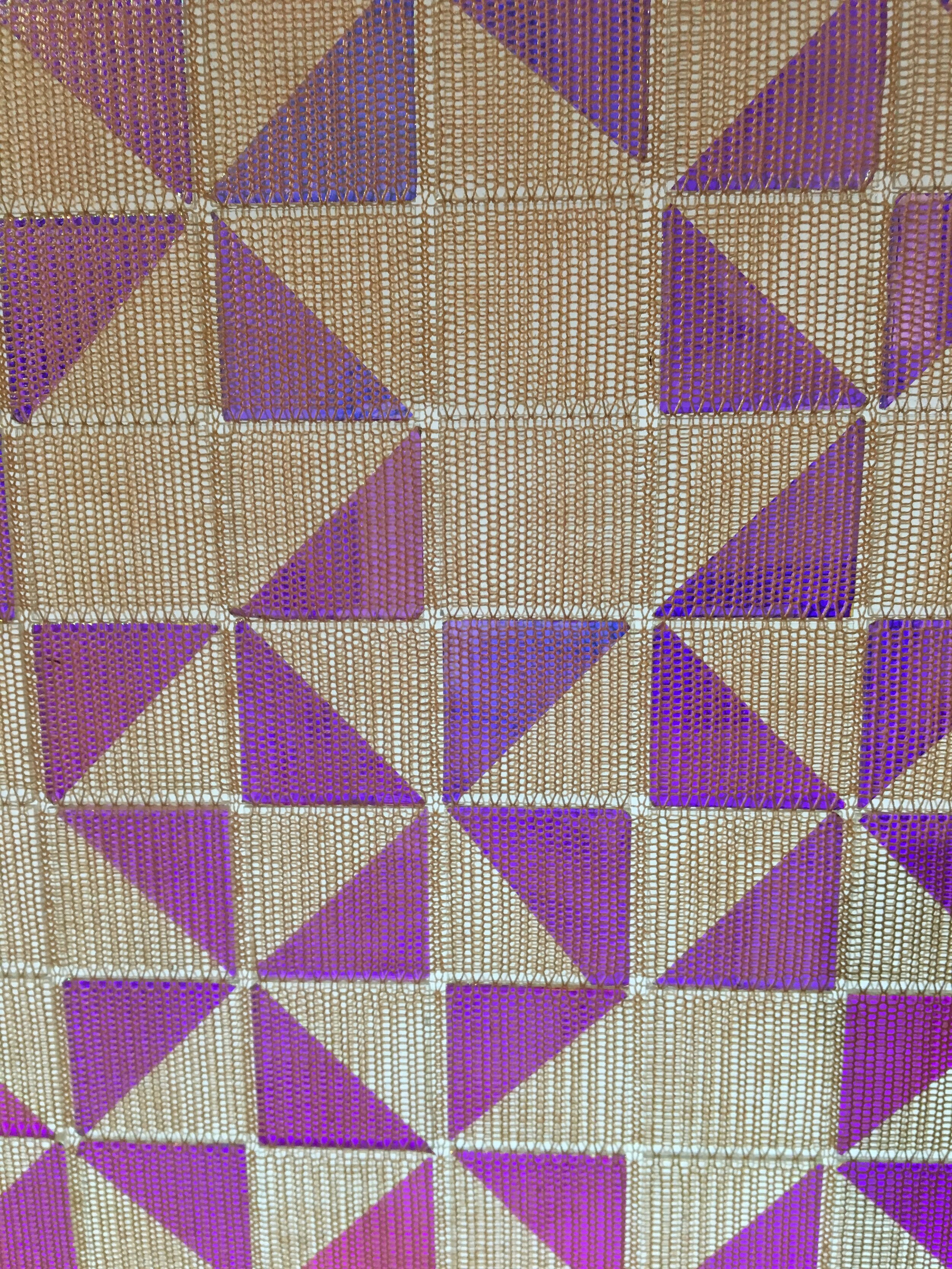
 Most of her work was transparent, luminous or structured in a way to enhance, move or shield light in internal spaces. The repeats were beautiful and called out to be caressed, thankfully something that was not frowned upon in the exhibition.Christine Muller:After the emmense and intense paper printing of Weltformat DXB Muller produced her own works, inspired by the islamic patterns she encountered here in Dubai, on silk flags whose construction was outsourced.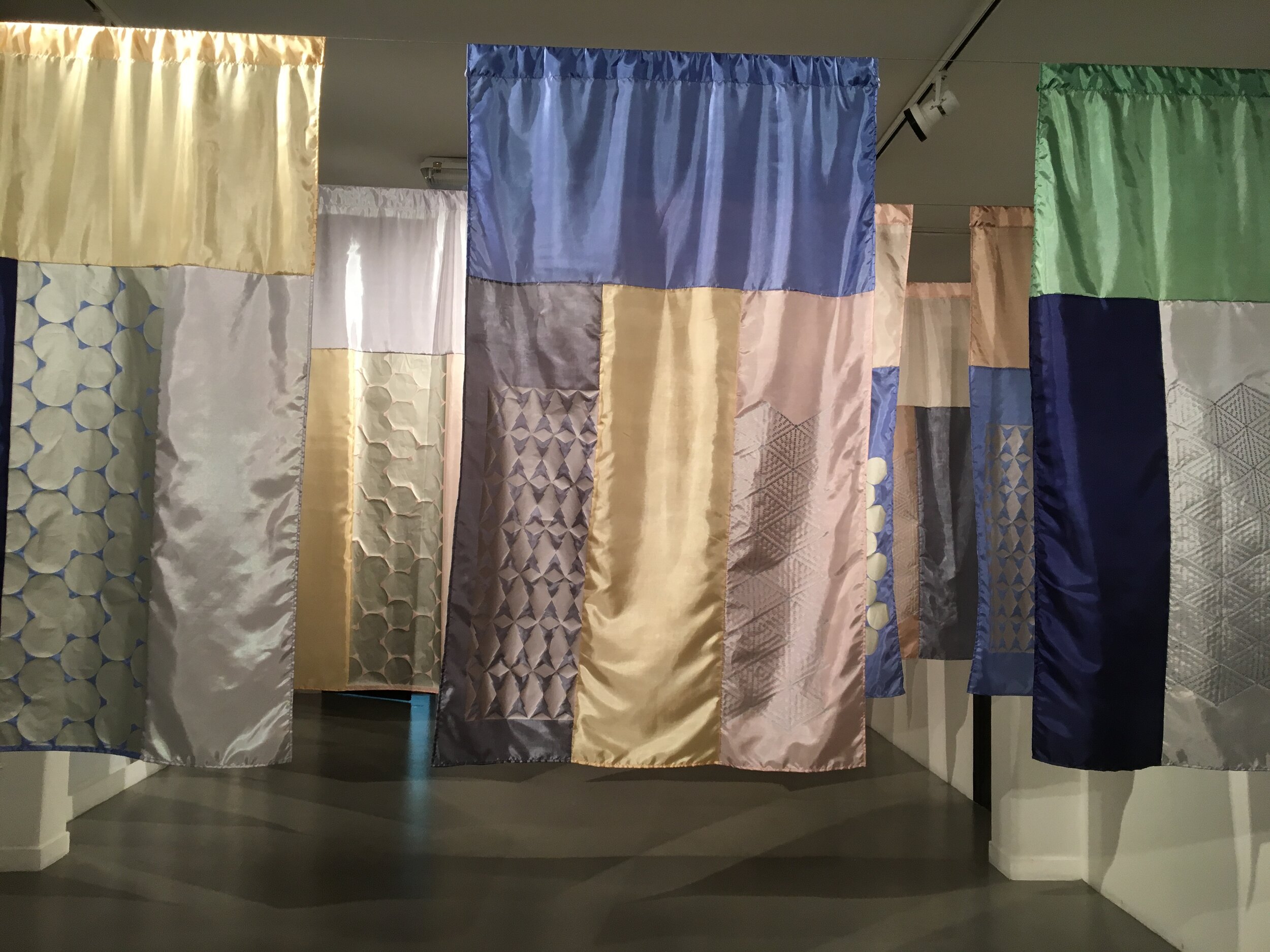
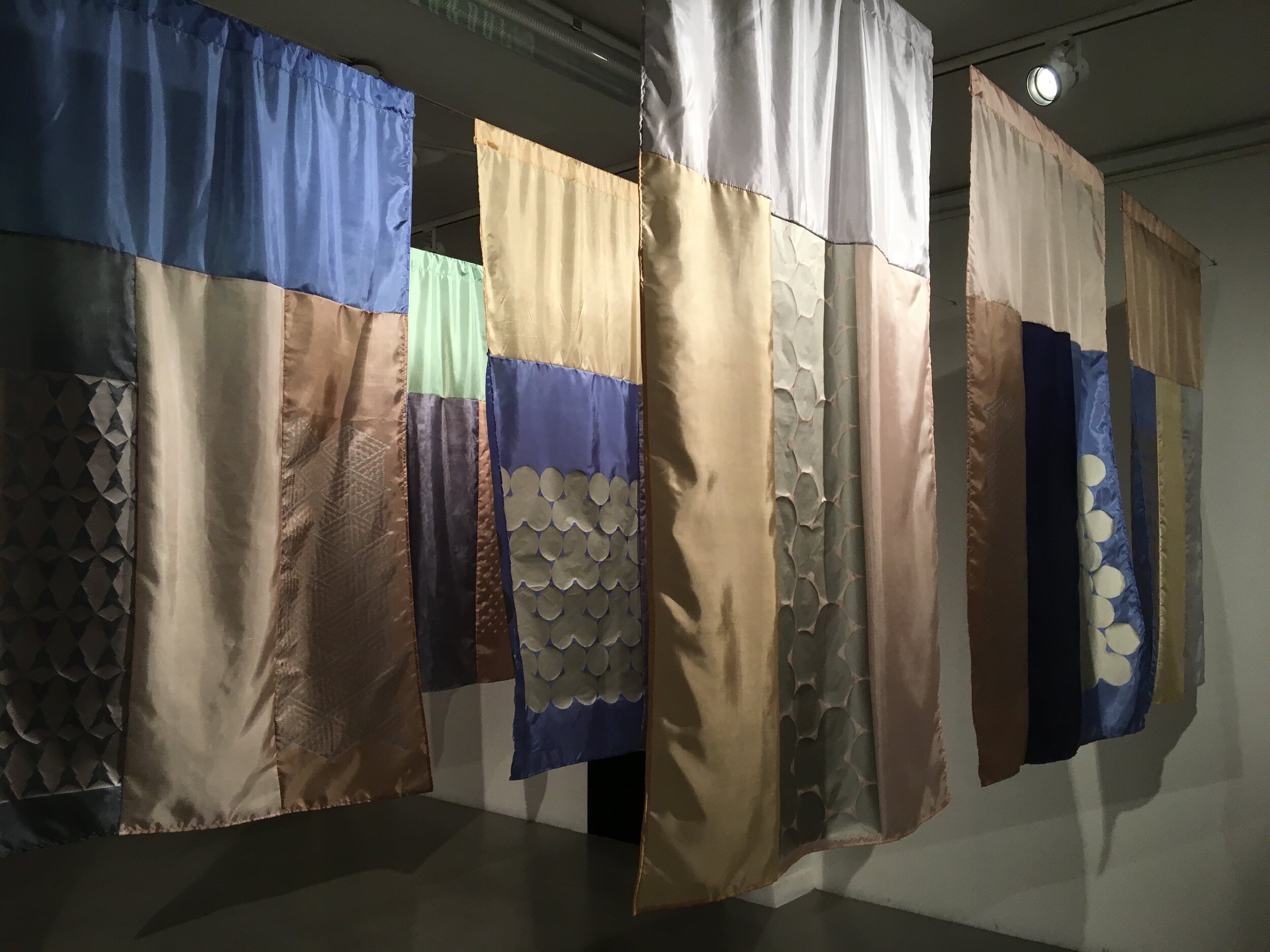
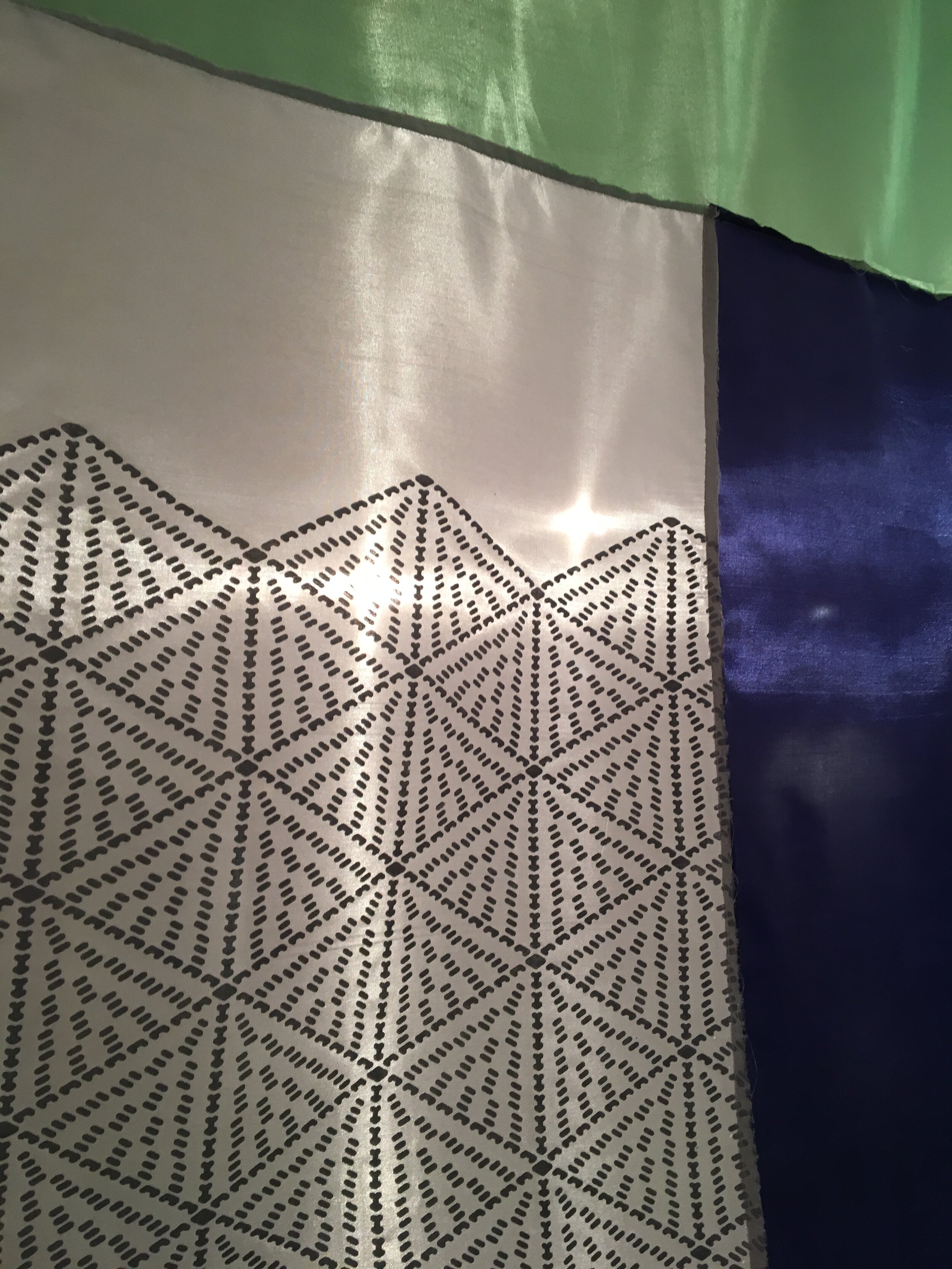
 Most of the pieces had the format of flags local to the Gulf nations, and the use of fine silks gave a luminous subtly to the prints. The audience was encouraged to move through the flags, so that they would float and swirl in the gallery space. The colour palette really felt indicative of the region, the luscious golds, sky blues and rusty sand colours.The exhibition made me question my production or lack thereof. What am I afraid of? What am I trying to stop and why? Why am I restricting my production to small scale pieces? Is it space? of lack of vision?