Fred Sandback and Hassan Sharif fulfilled my vision
Gustav Metzger challenged my thinking
Grayson Perry tickled my fancy
David Claerbout blew my mind
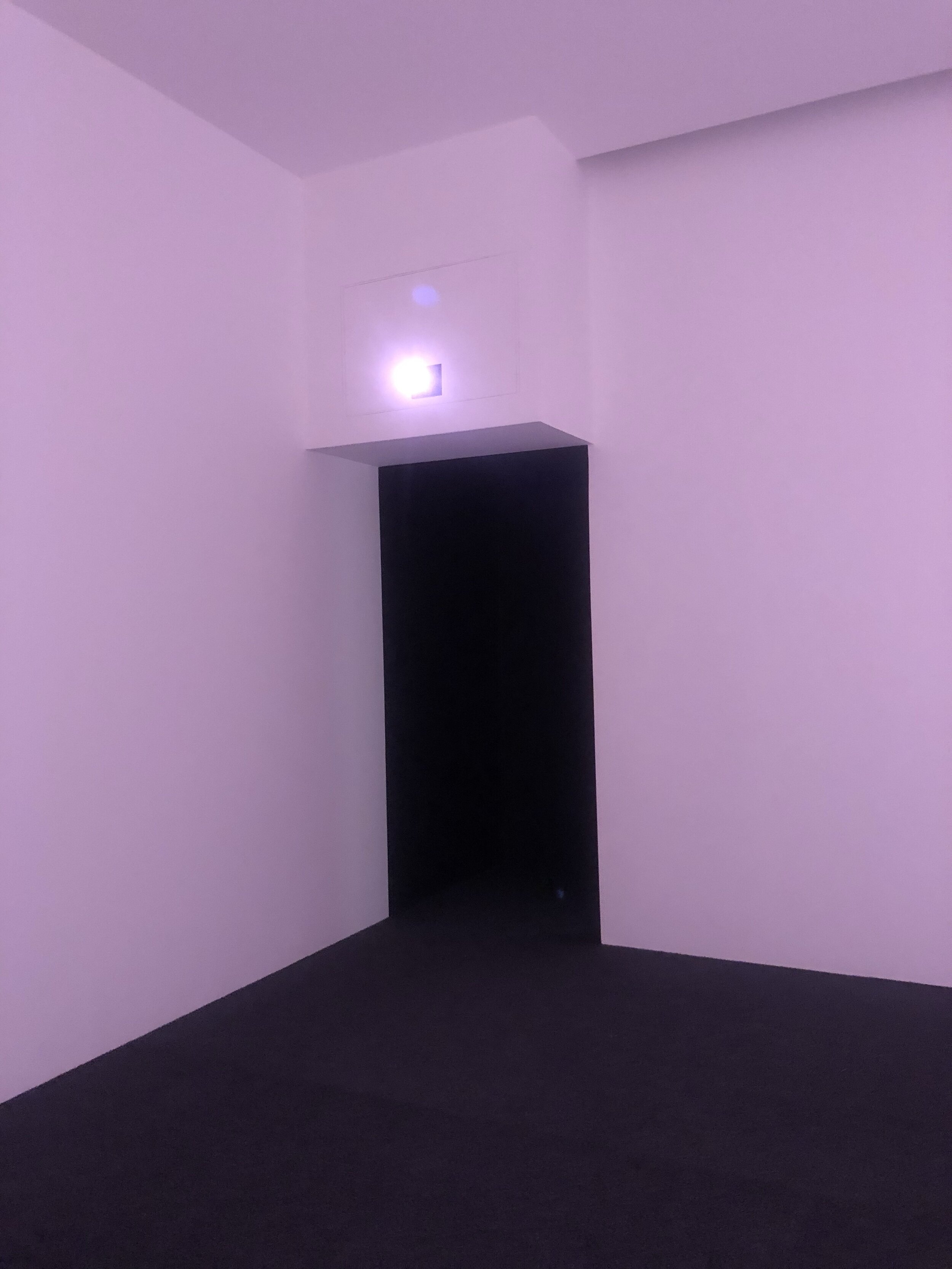
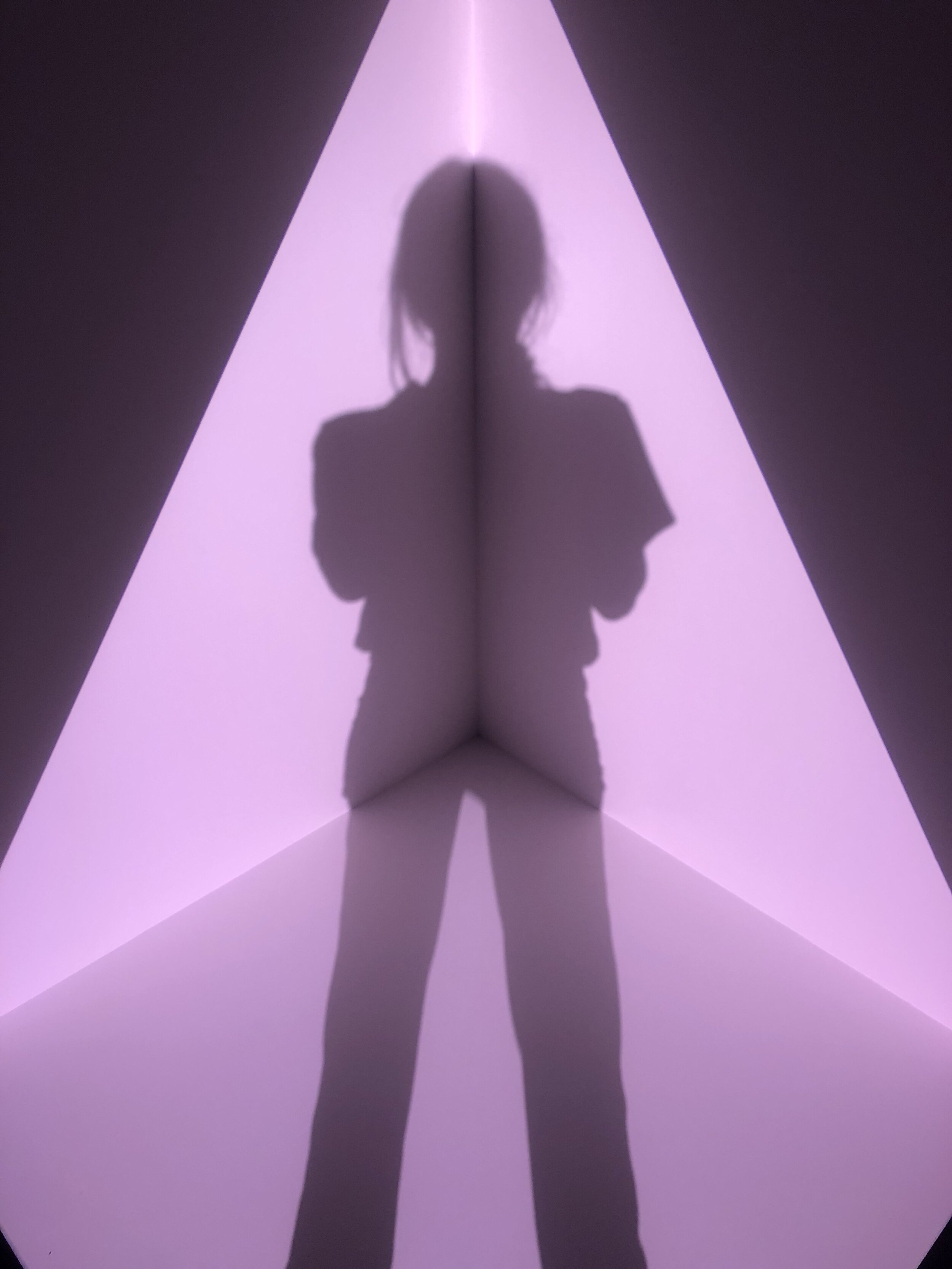
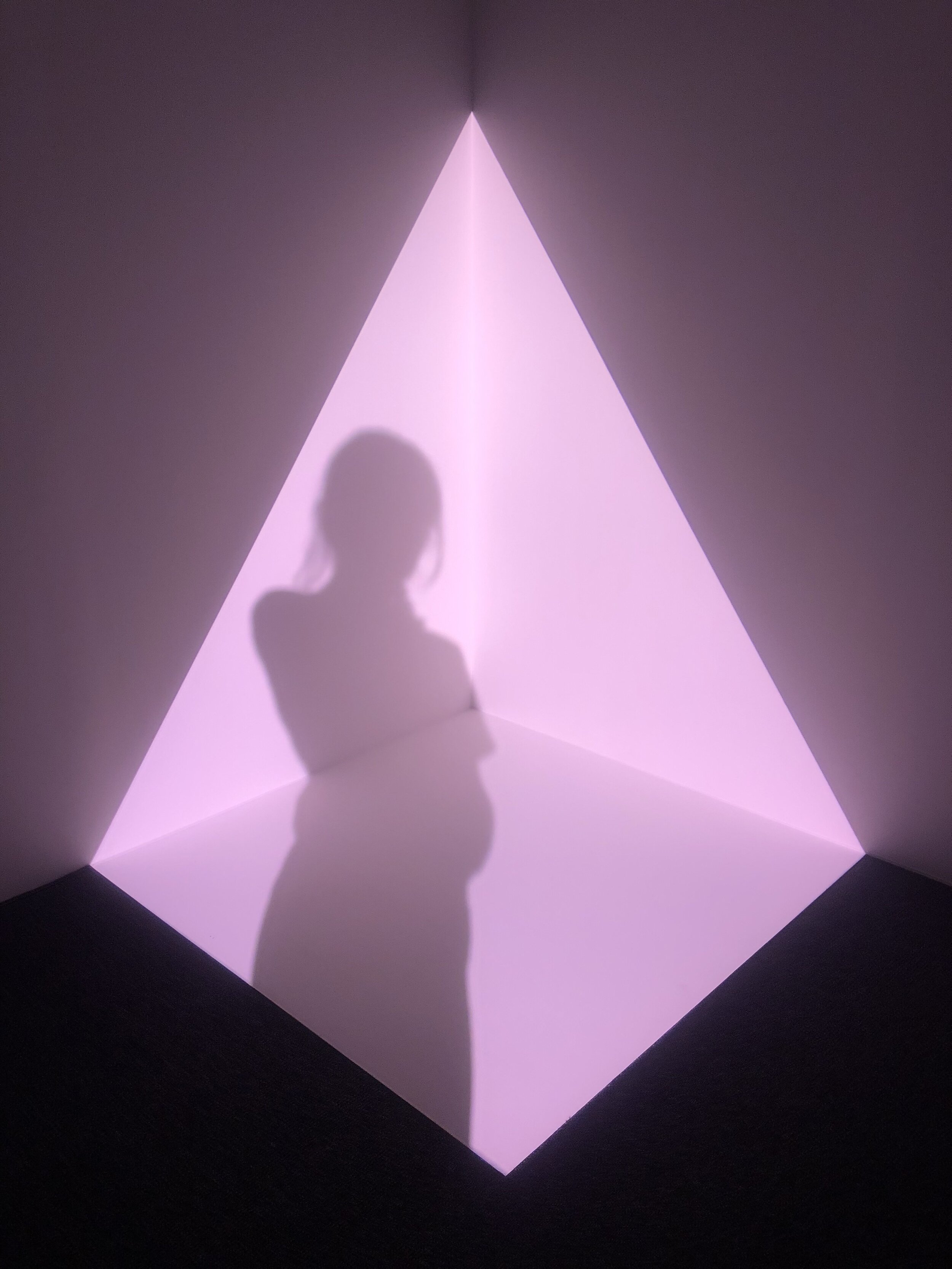
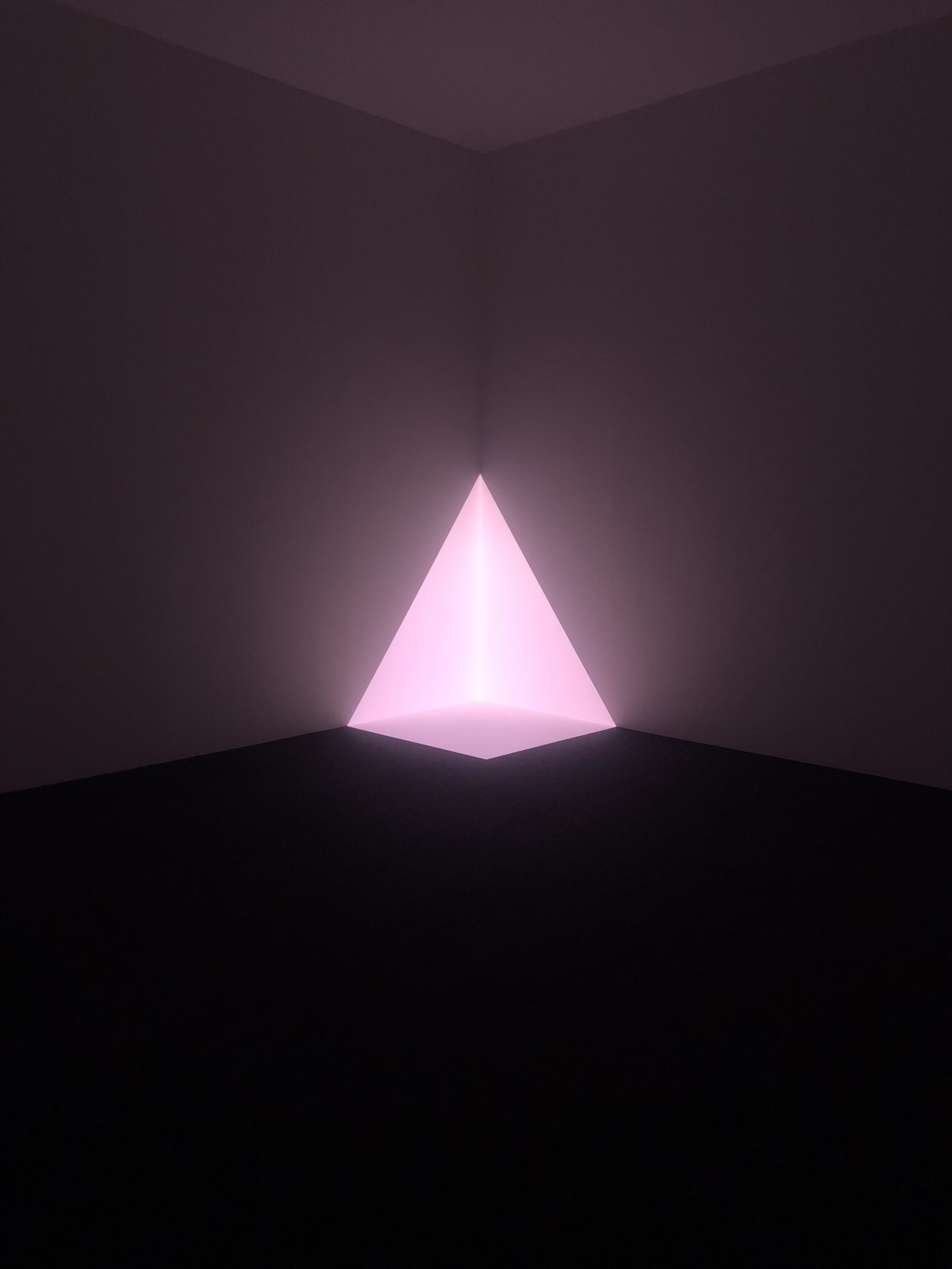
James Turrell comforted my soul.
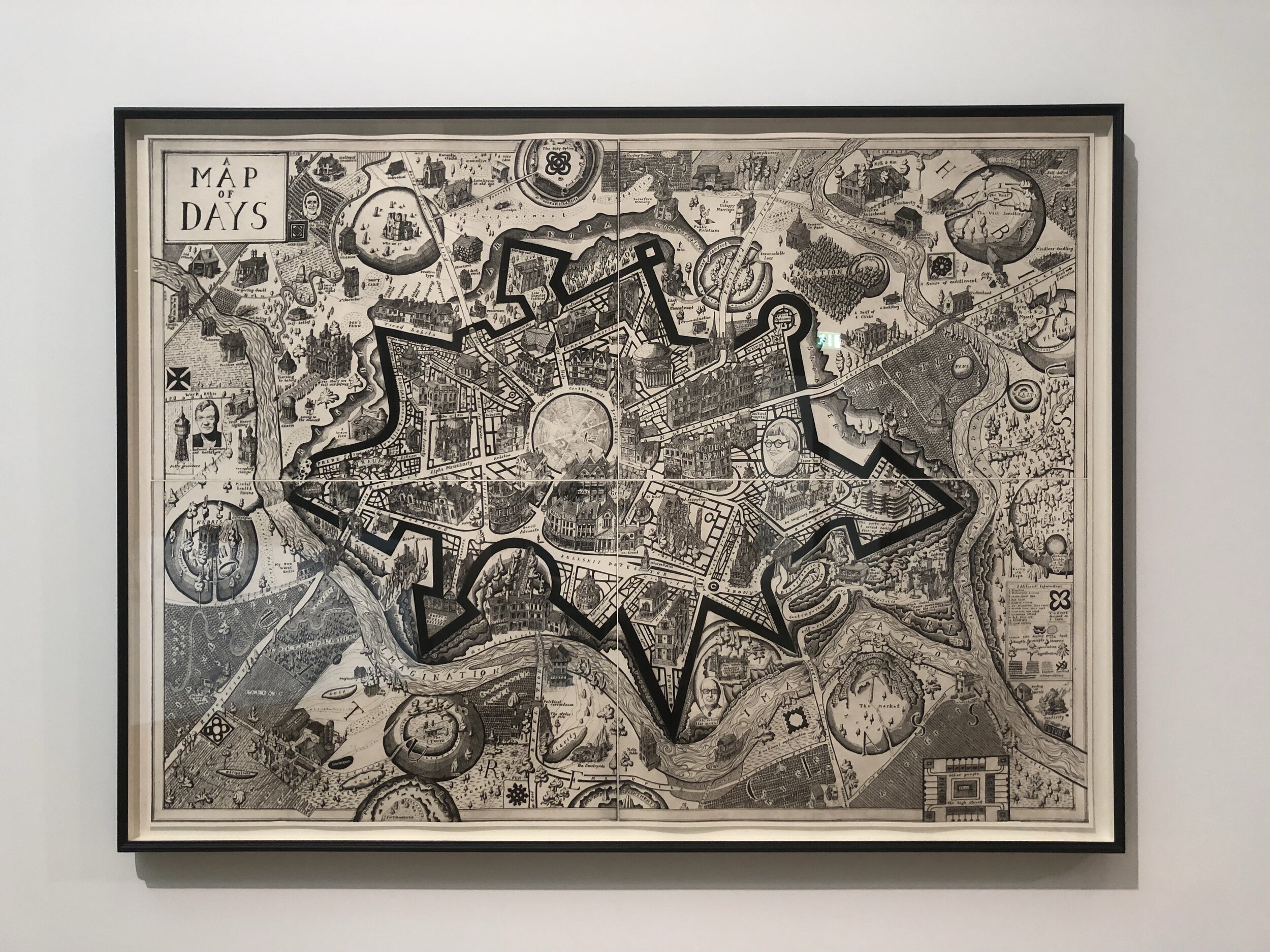
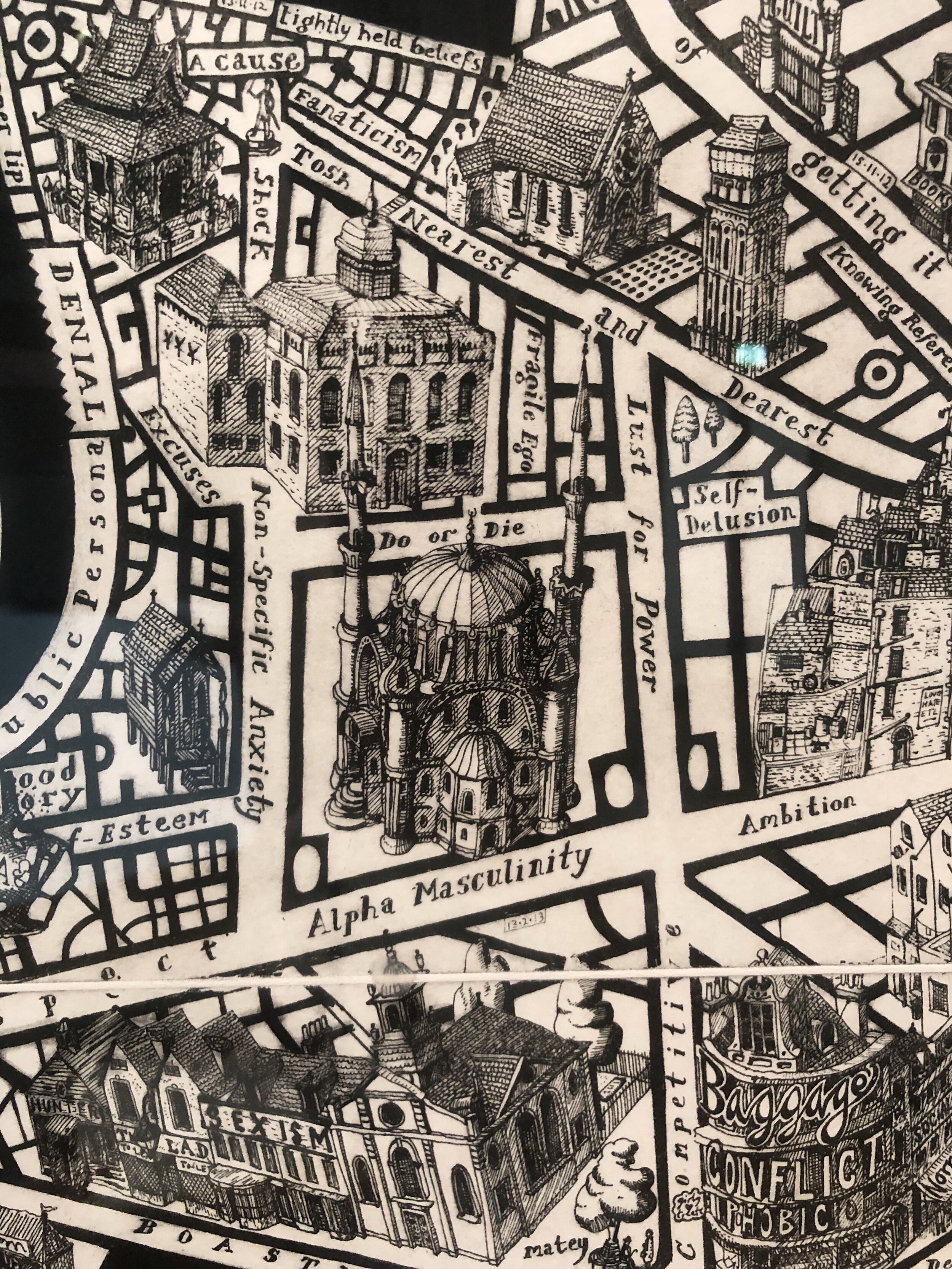
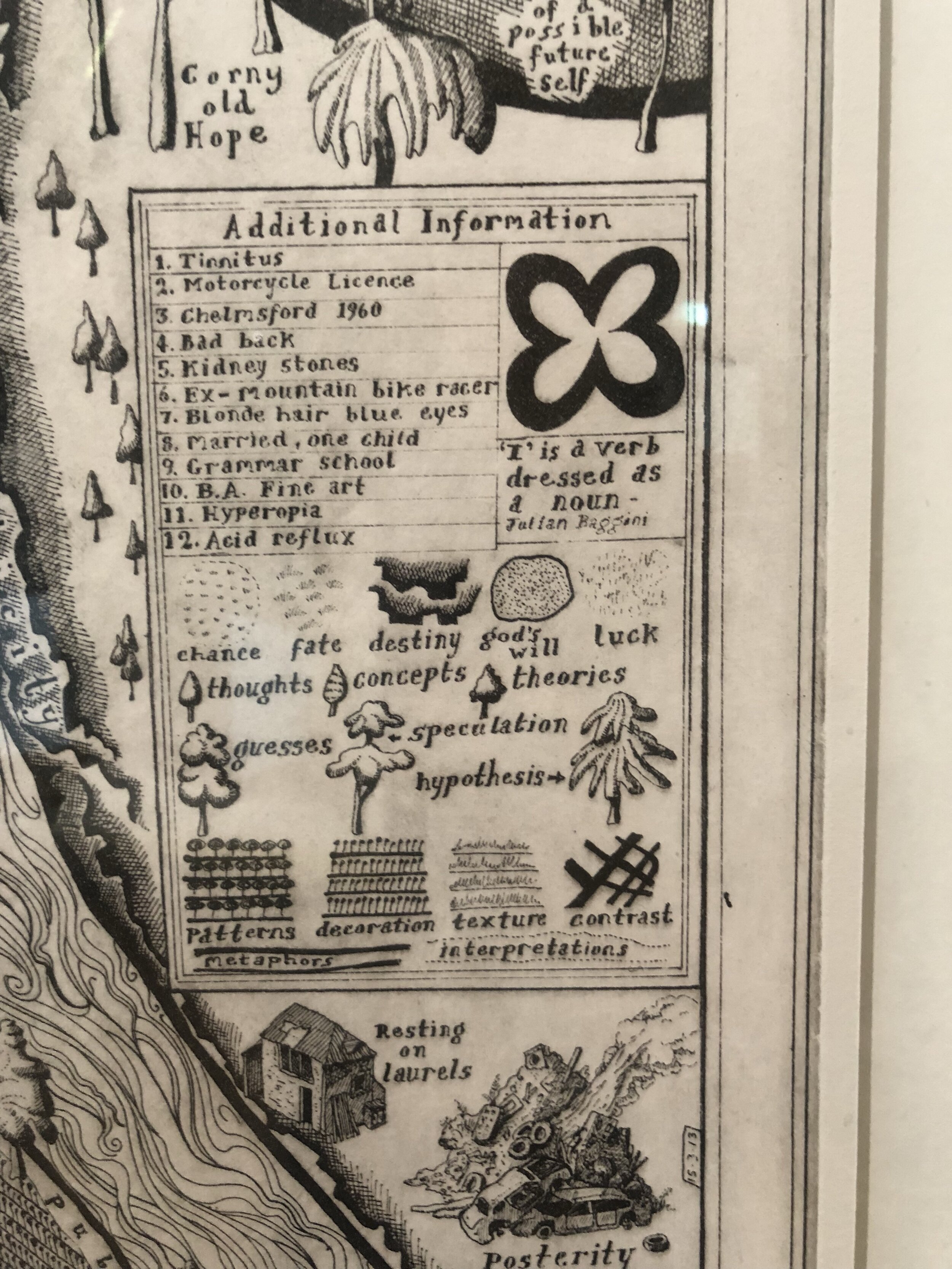

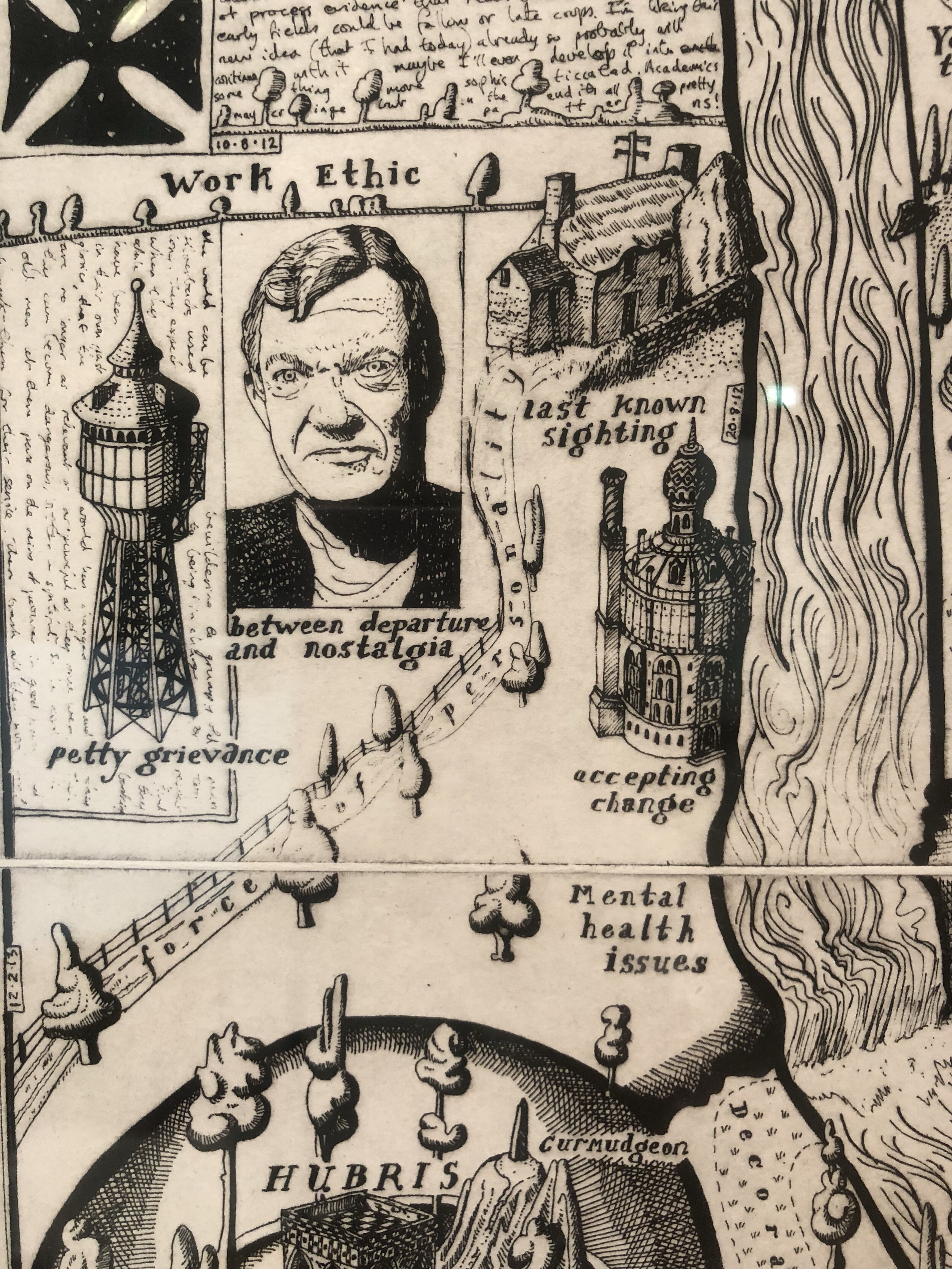
Grayson Perry, A Map of Days, 2013, etching from four plates, 119.5 x 161 cm (my photos of artwork)
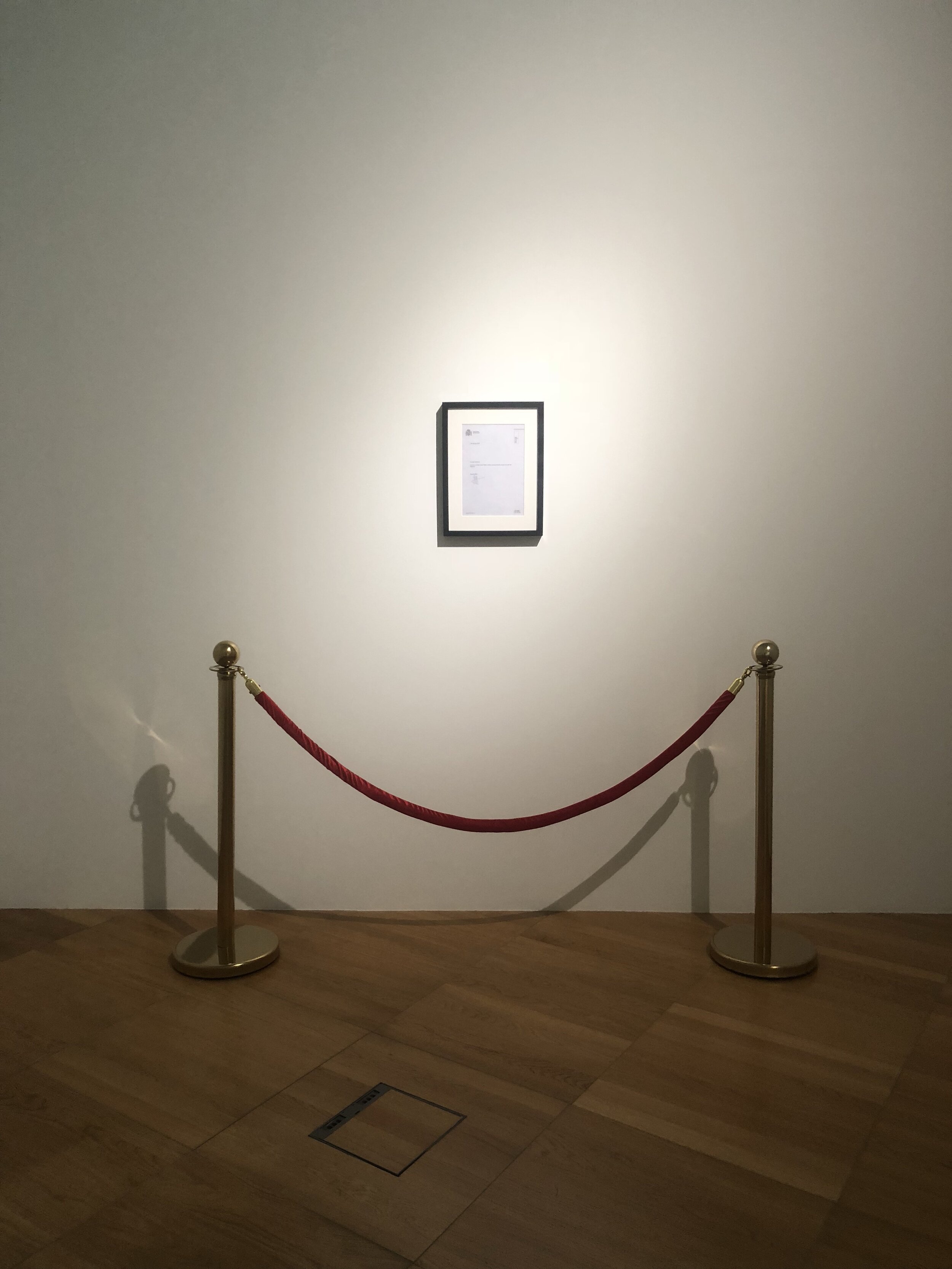
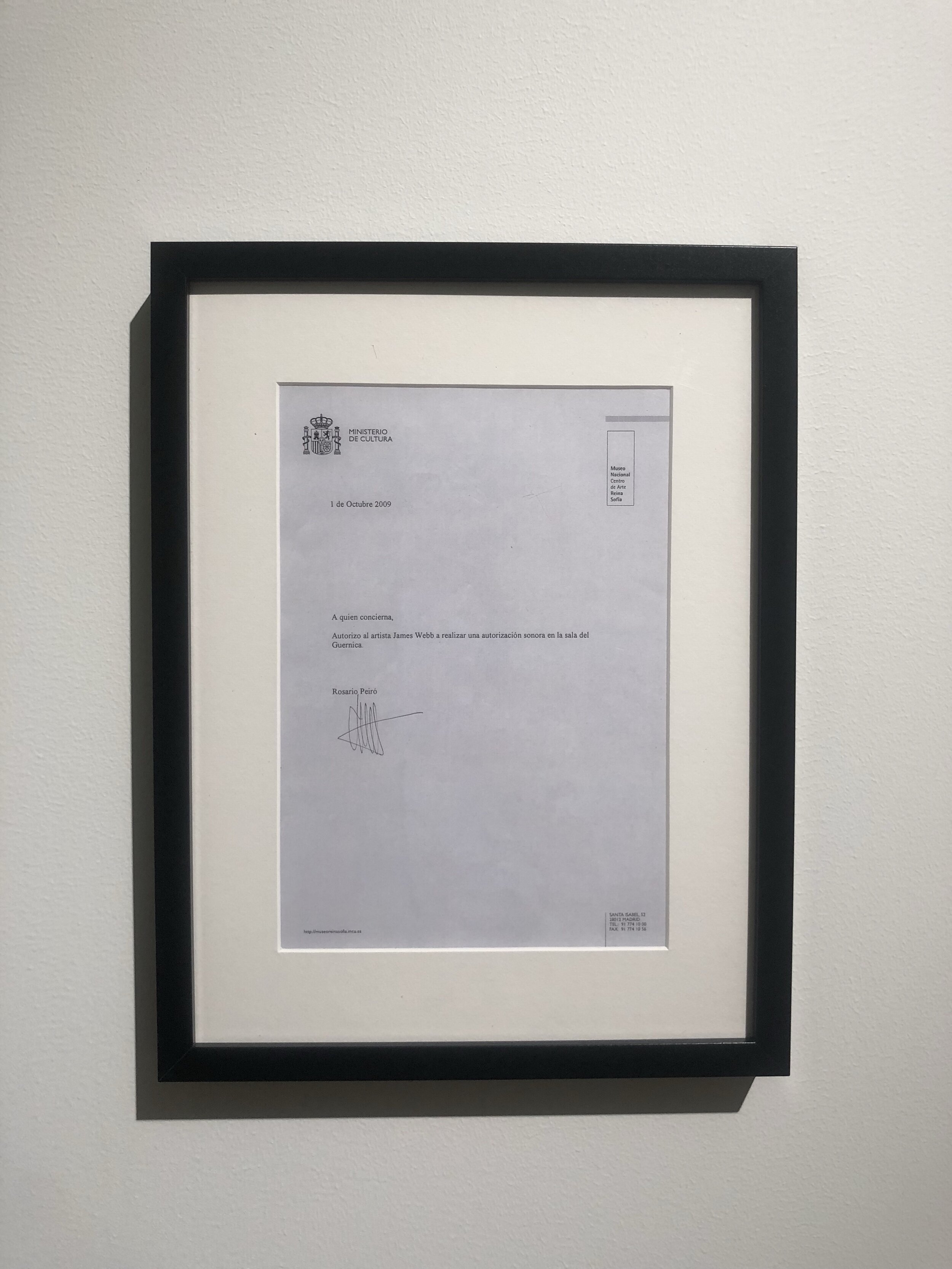
James Webb, Scream, 2008, signed certificate, speakers, assorted wires, audio, museum barrier, dimensions variable (my photos of artwork)
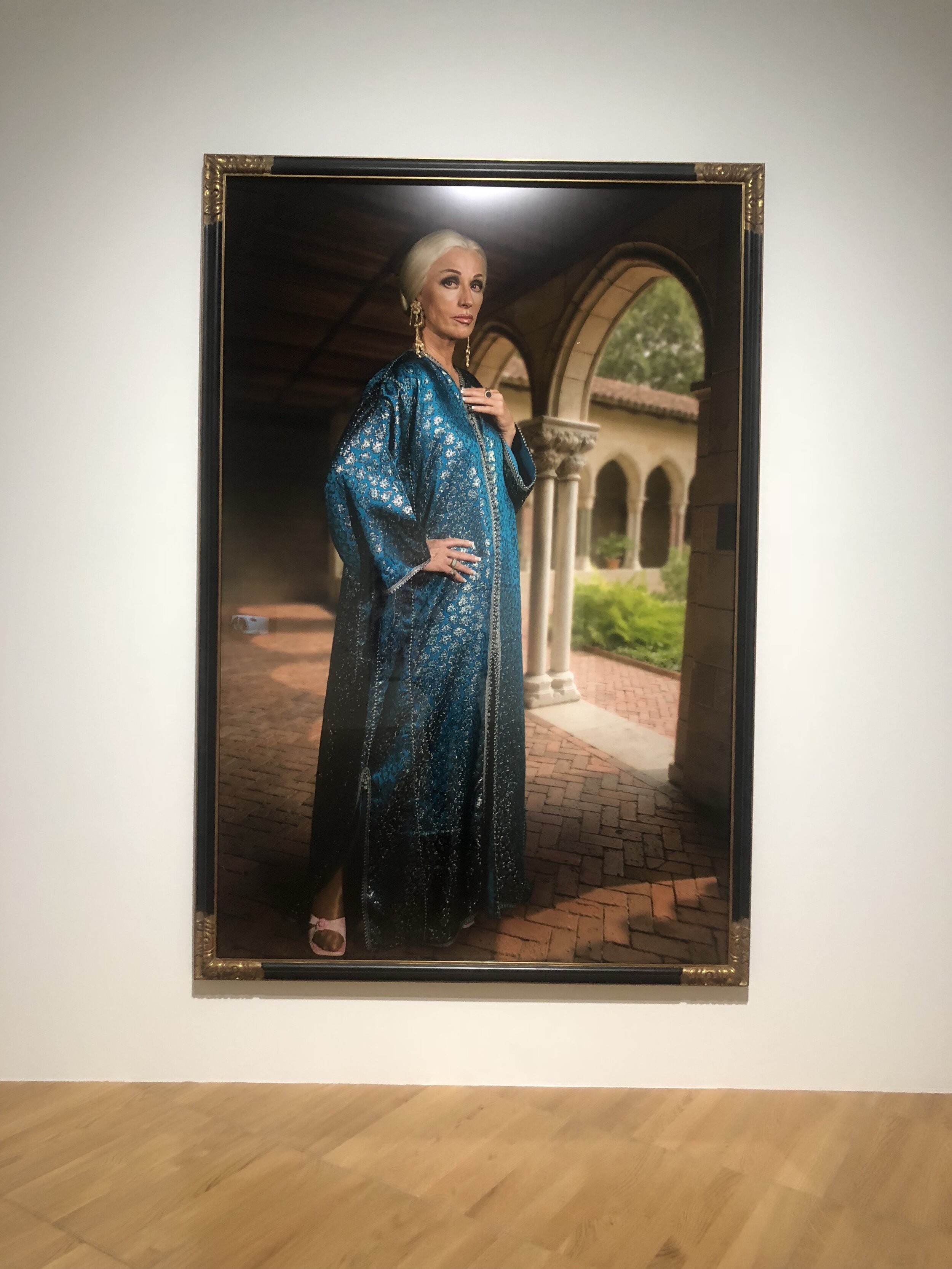
Cindy Sherman, Untitled #466, 2008, colour photograph, 246.1 x 162.6 cm (my photos of artwork)

Hans-Peter Feldman, One on One (milky Way), 2012, chocolate box and sign, dimensions variable
(my photos of artwork)
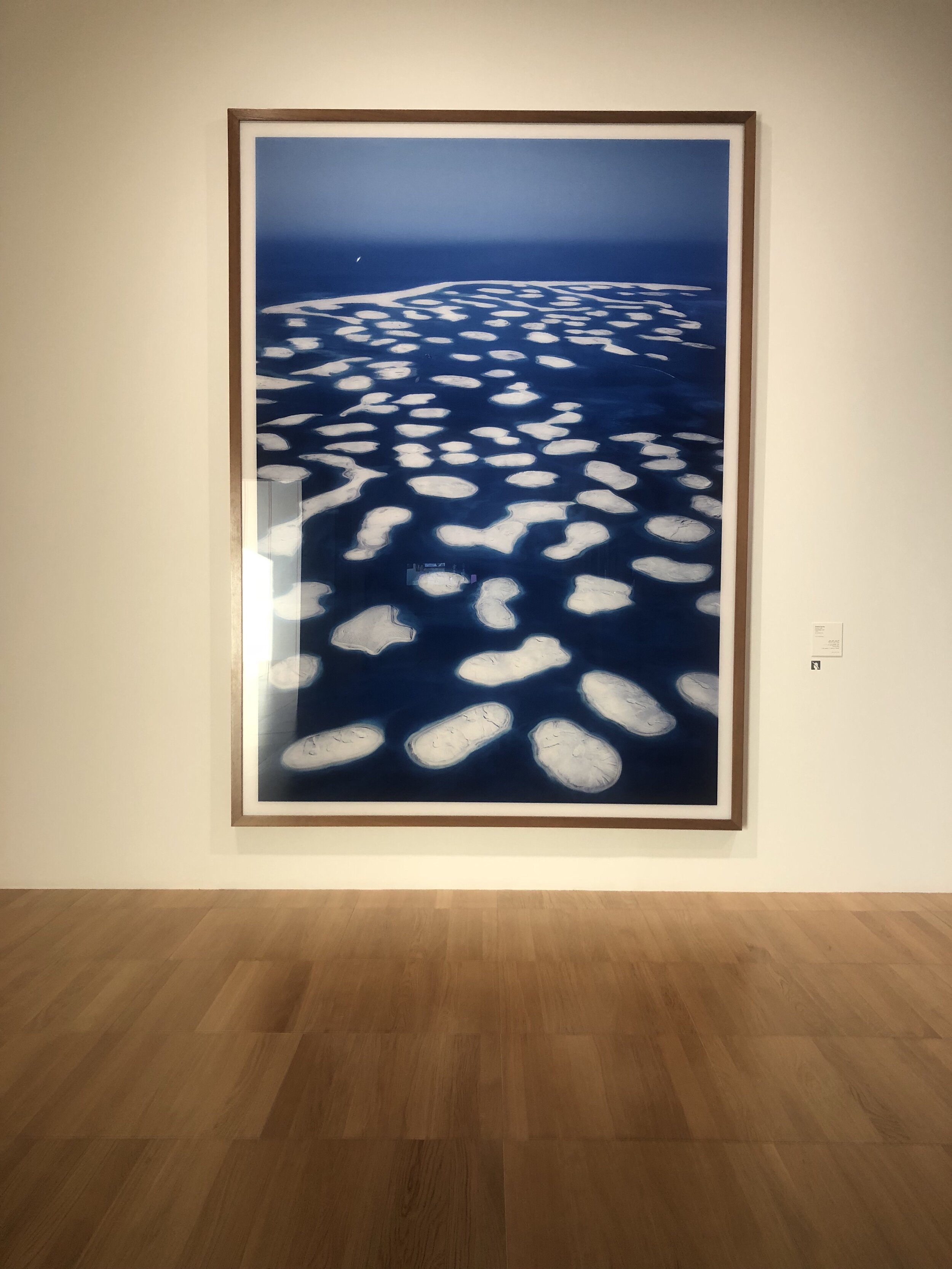
Andreas Gursky, Dubai World I, 2007, c-print, 307 x 223.3 x 6.2 cm (my photos of artwork)
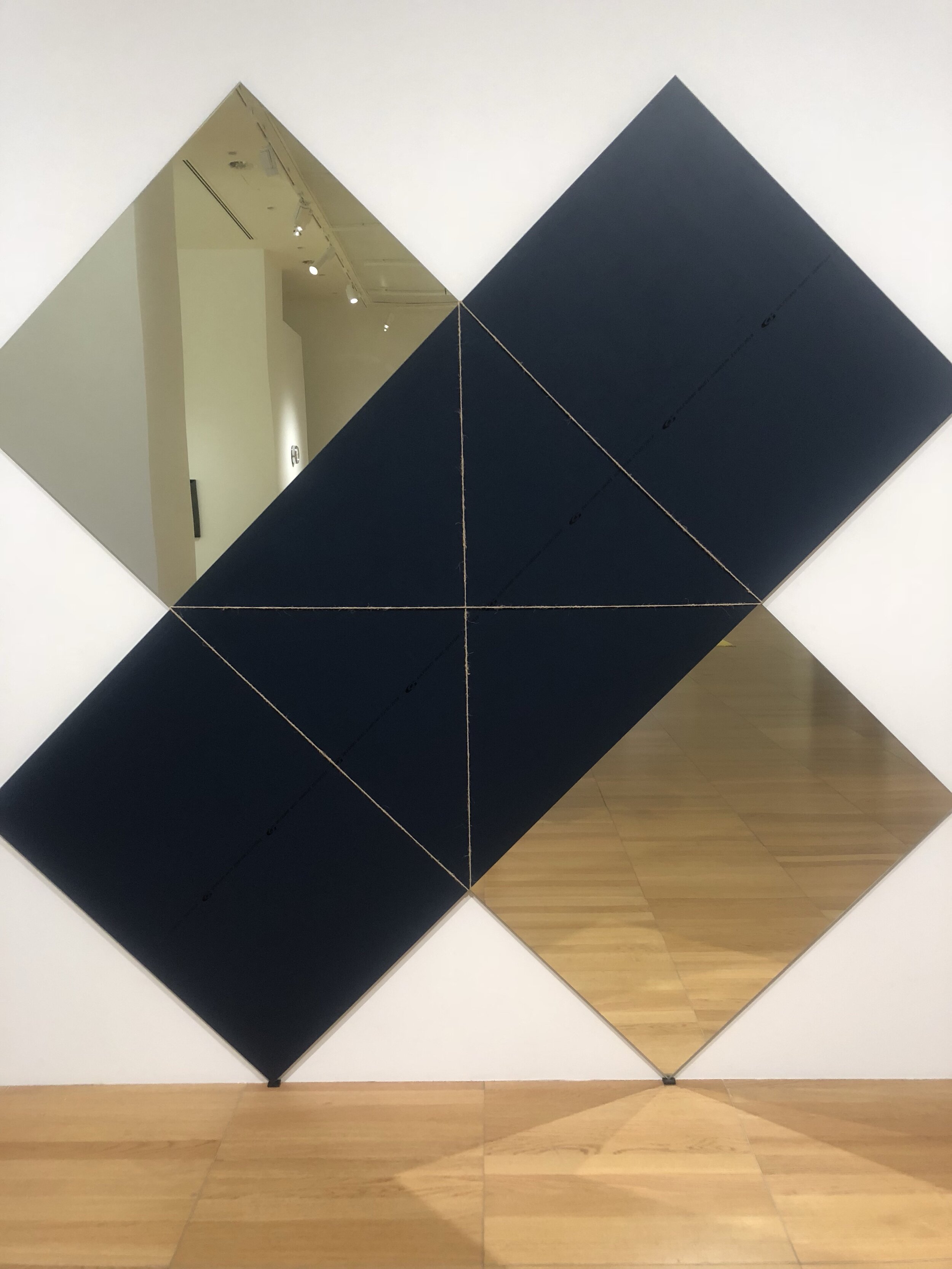
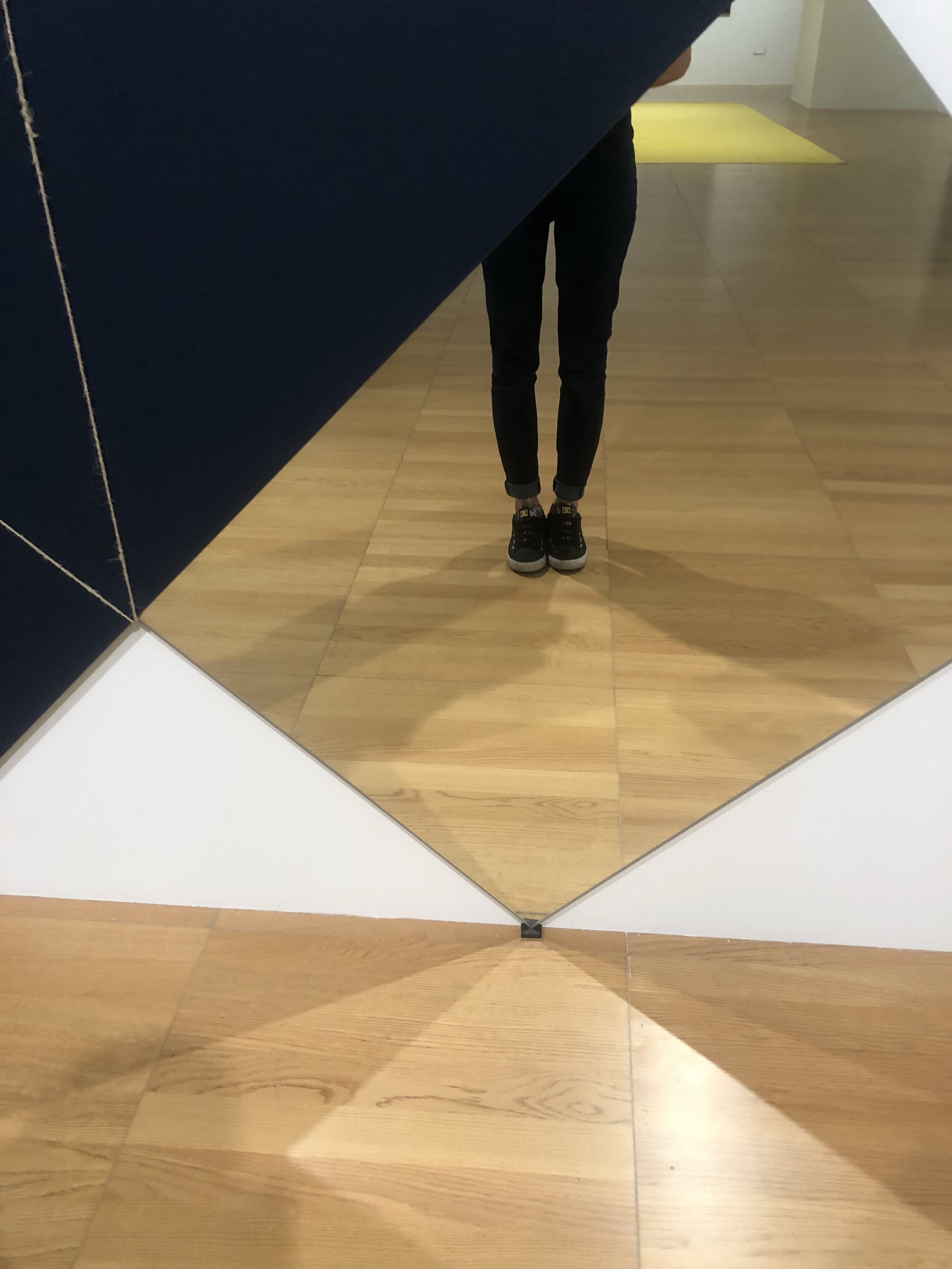
Michelangelo Pistoletto, METRO QUADRATO INFINITO, 1966/2018, sculpture, string, 240 x 240 cm (my photos of artwork)
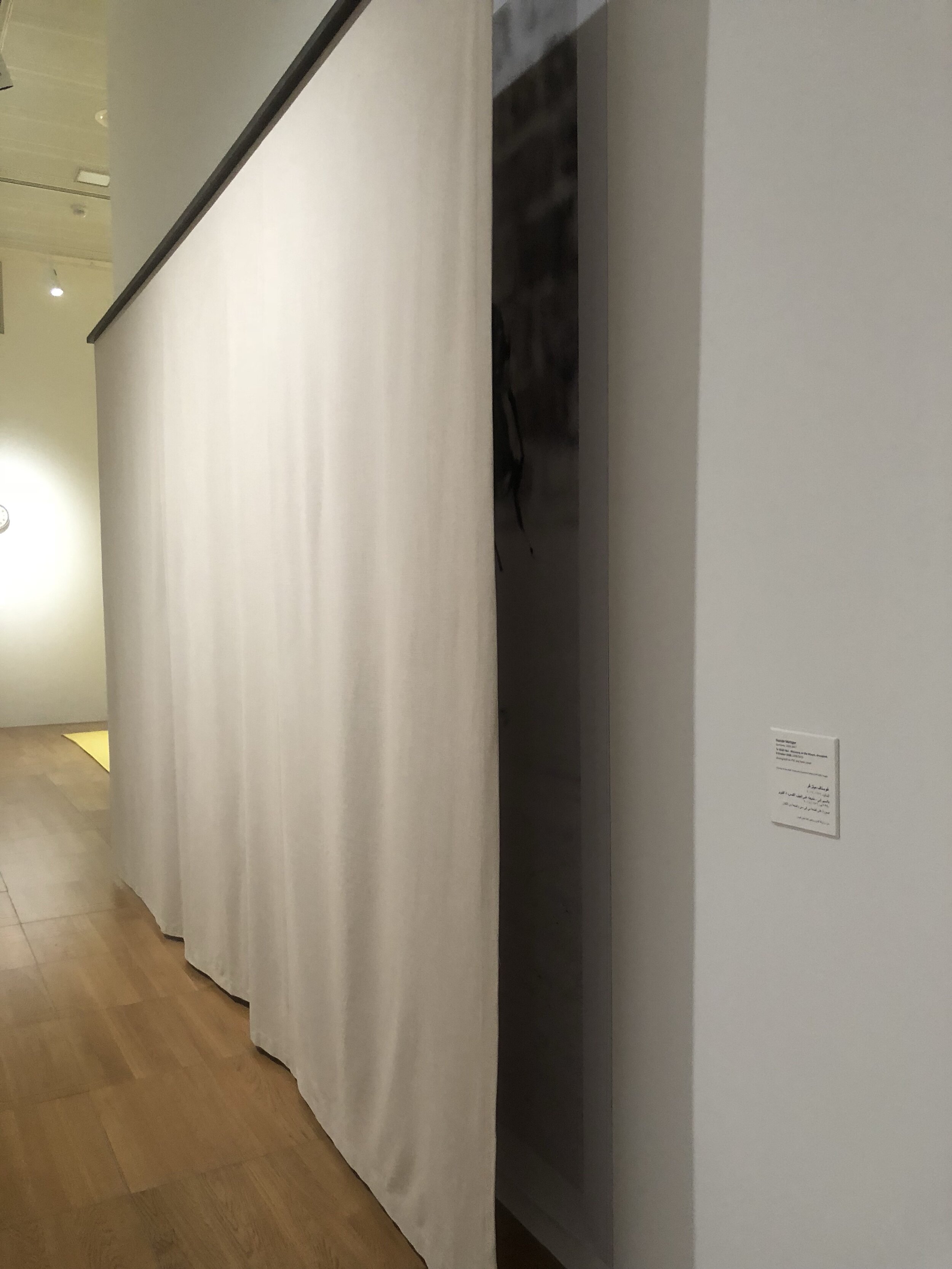
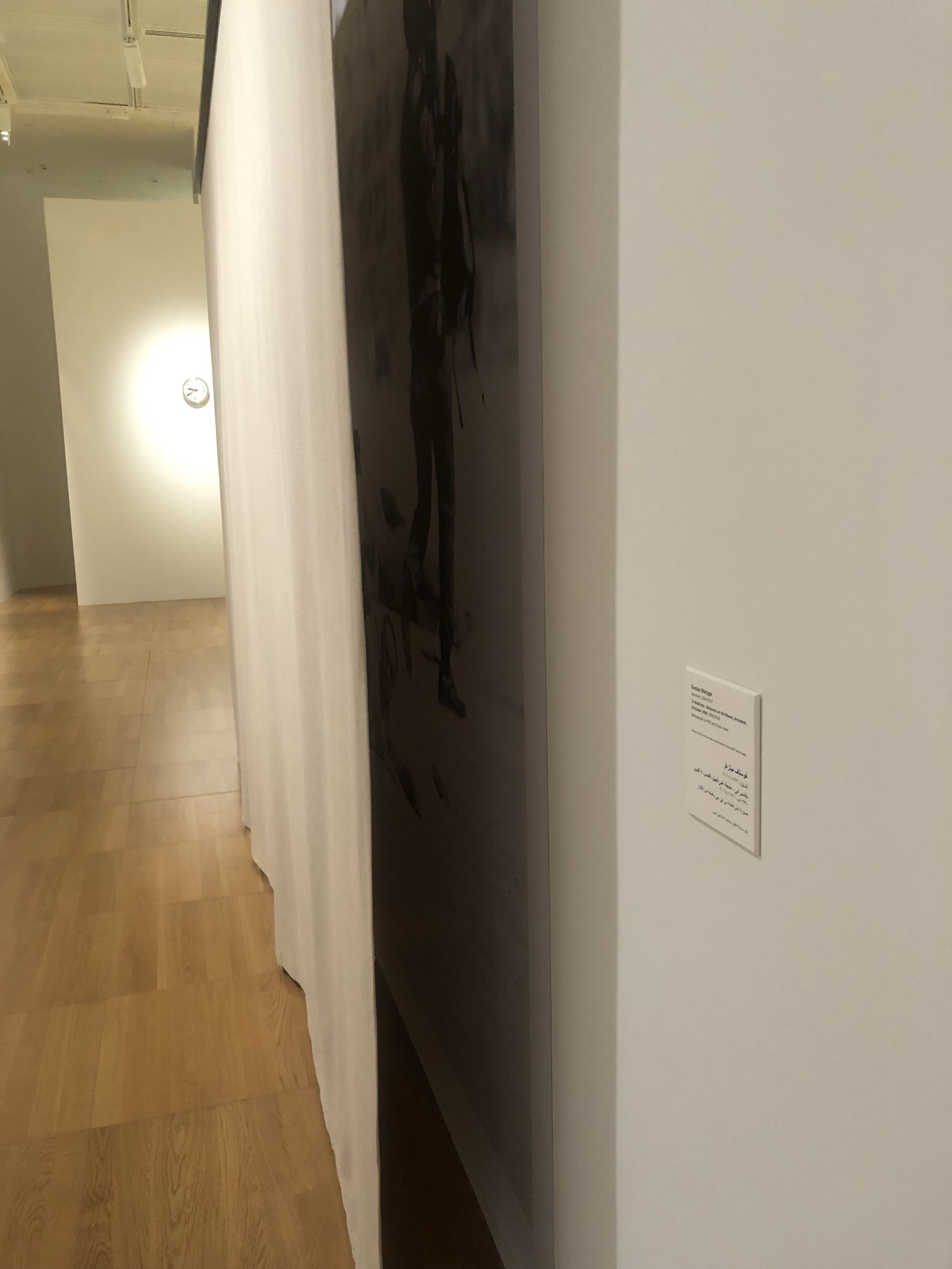
Gustav Metzger, To Walk Into - Massacre on the Mount, Jerusalem, November 8, 1990. 1996/2018, photograph on PVC and linen cover, 238 x 395 x 30 cm (my photos of artwork)
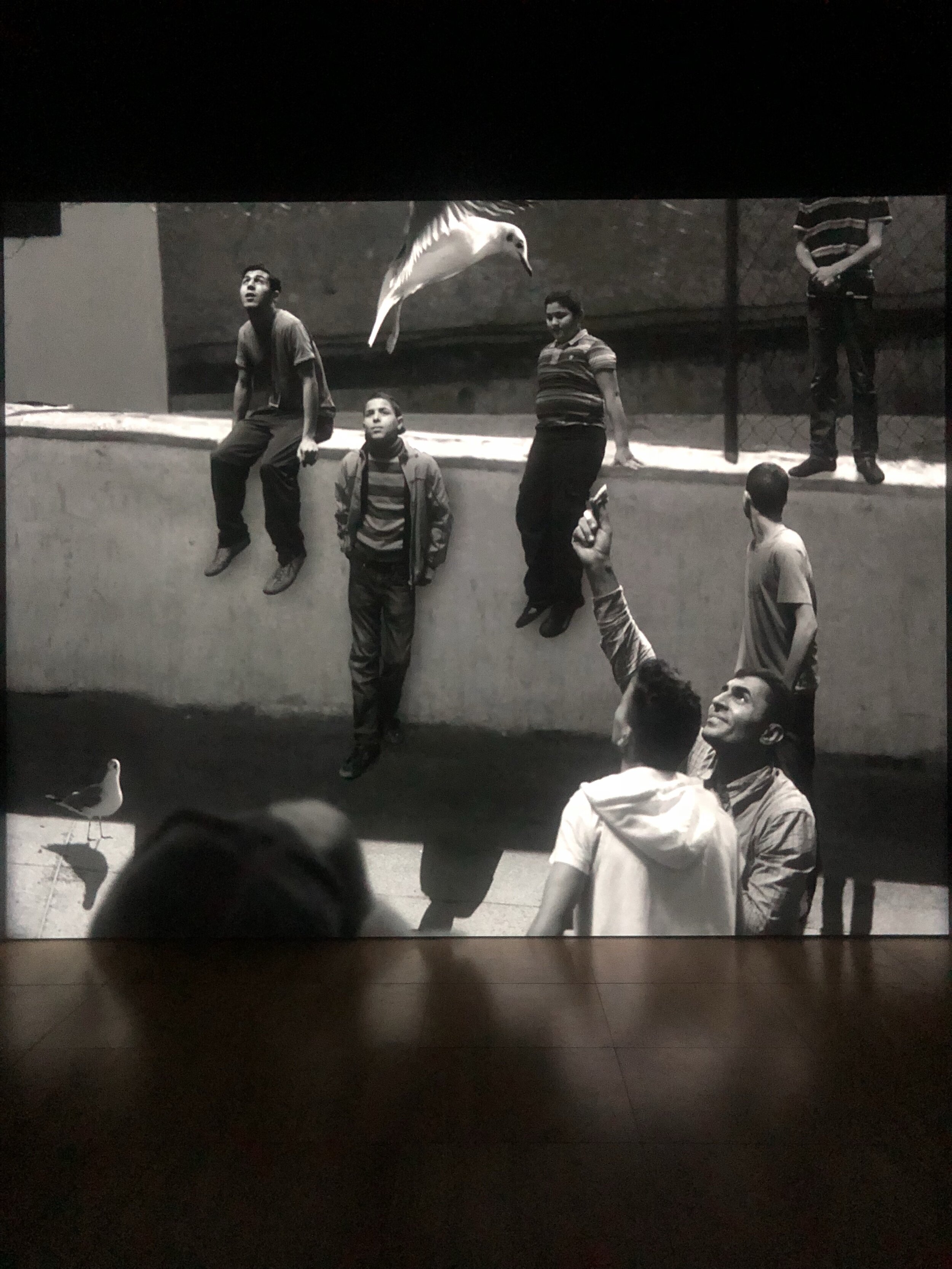

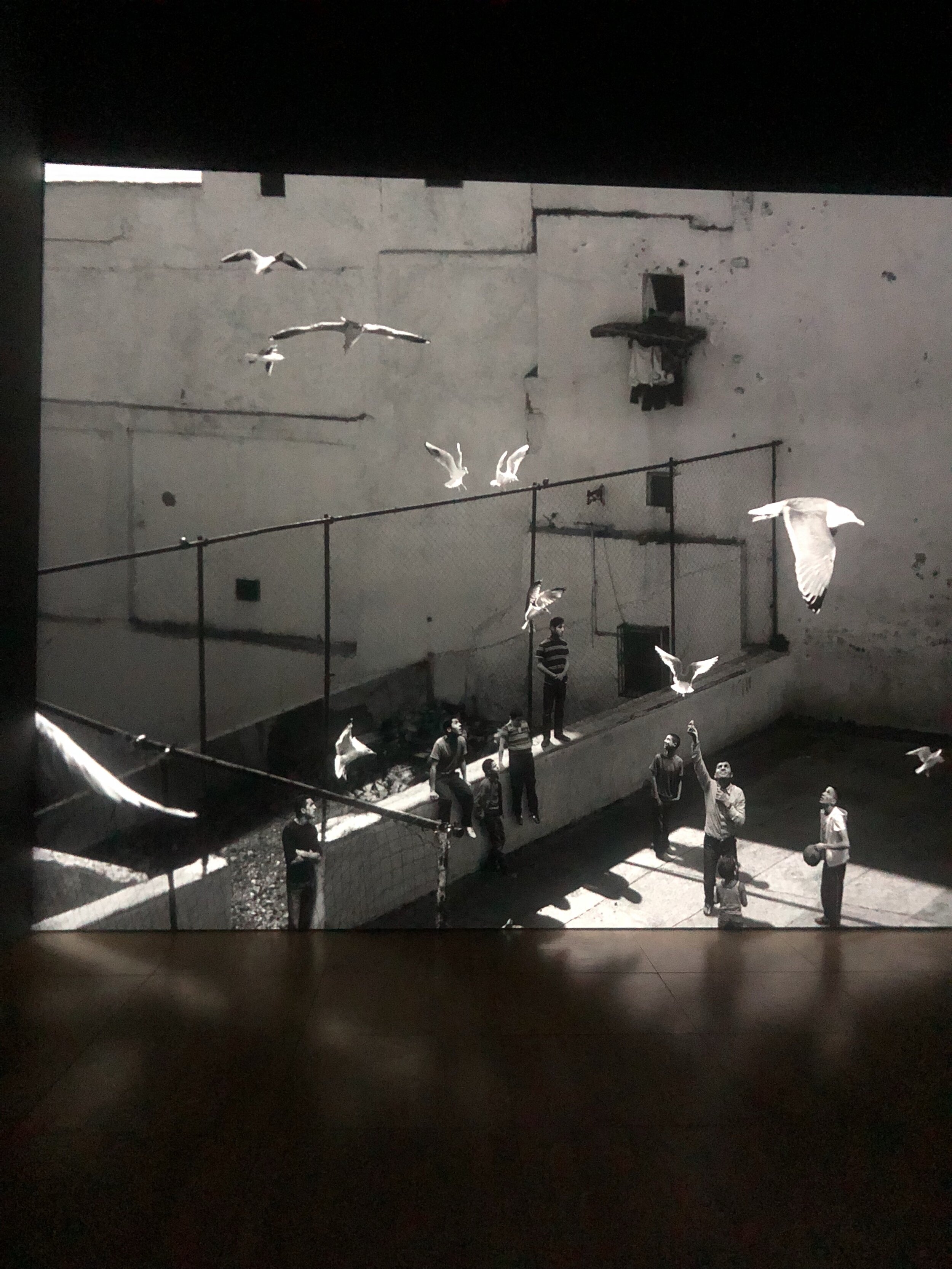
David Claerbout, The Algiers' Section of a Happy Moment, 2008, single-channel video projection, b/w, stereo, 37 mins (my photos of artwork)
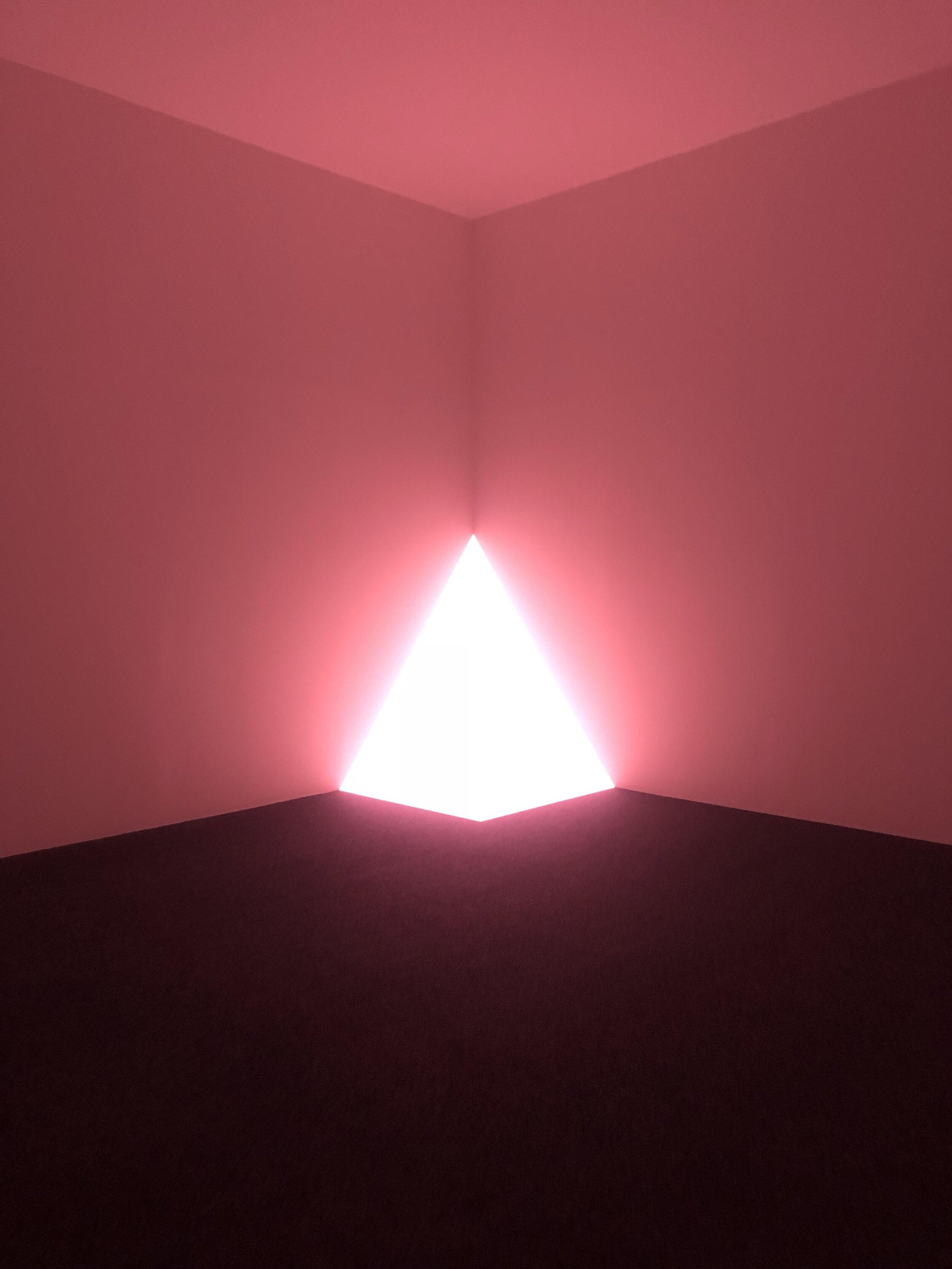
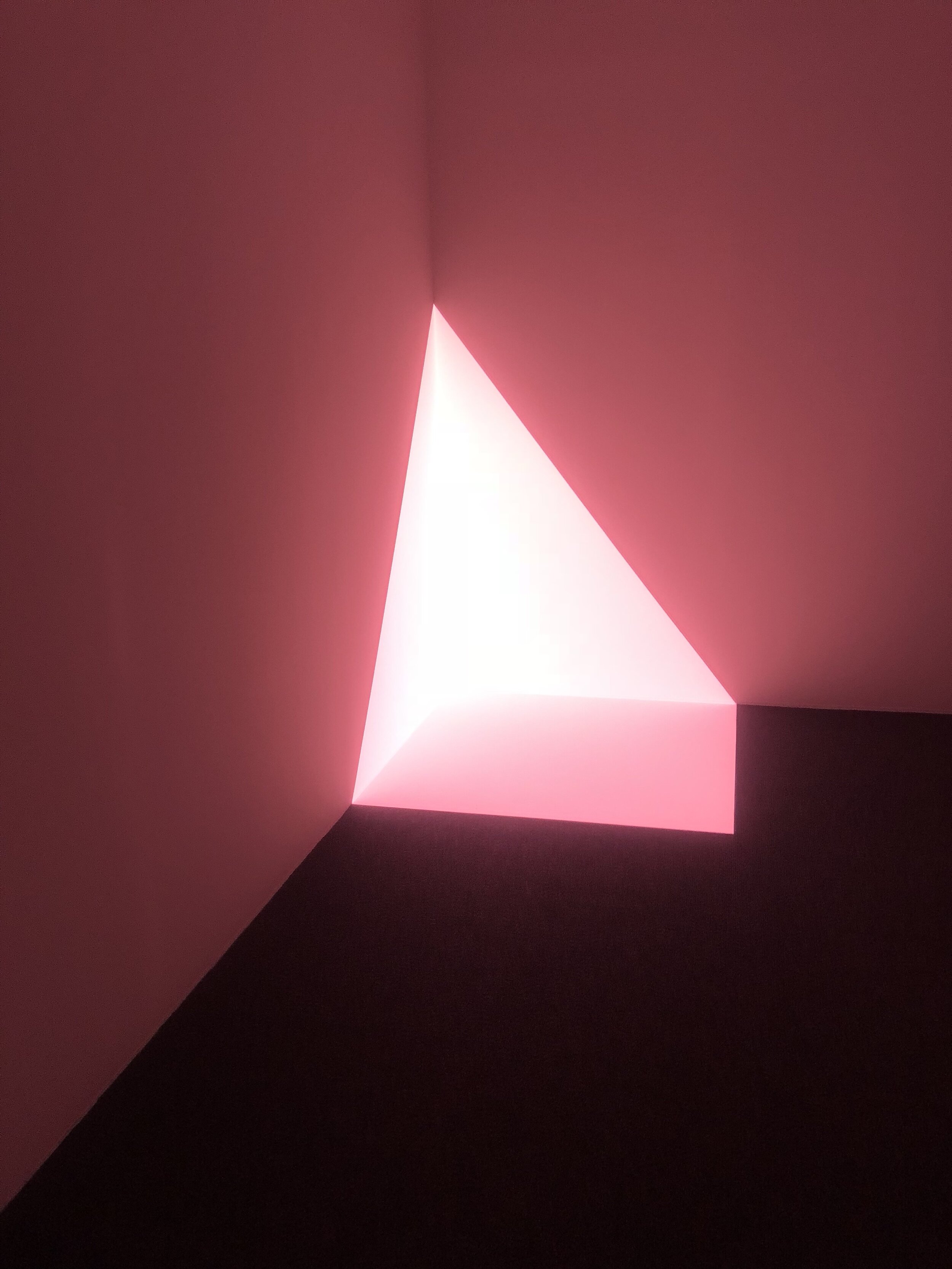
James Turrell, Alta (Pink), 1968, cross corner projection, dimensions variable (my photos of artwork)

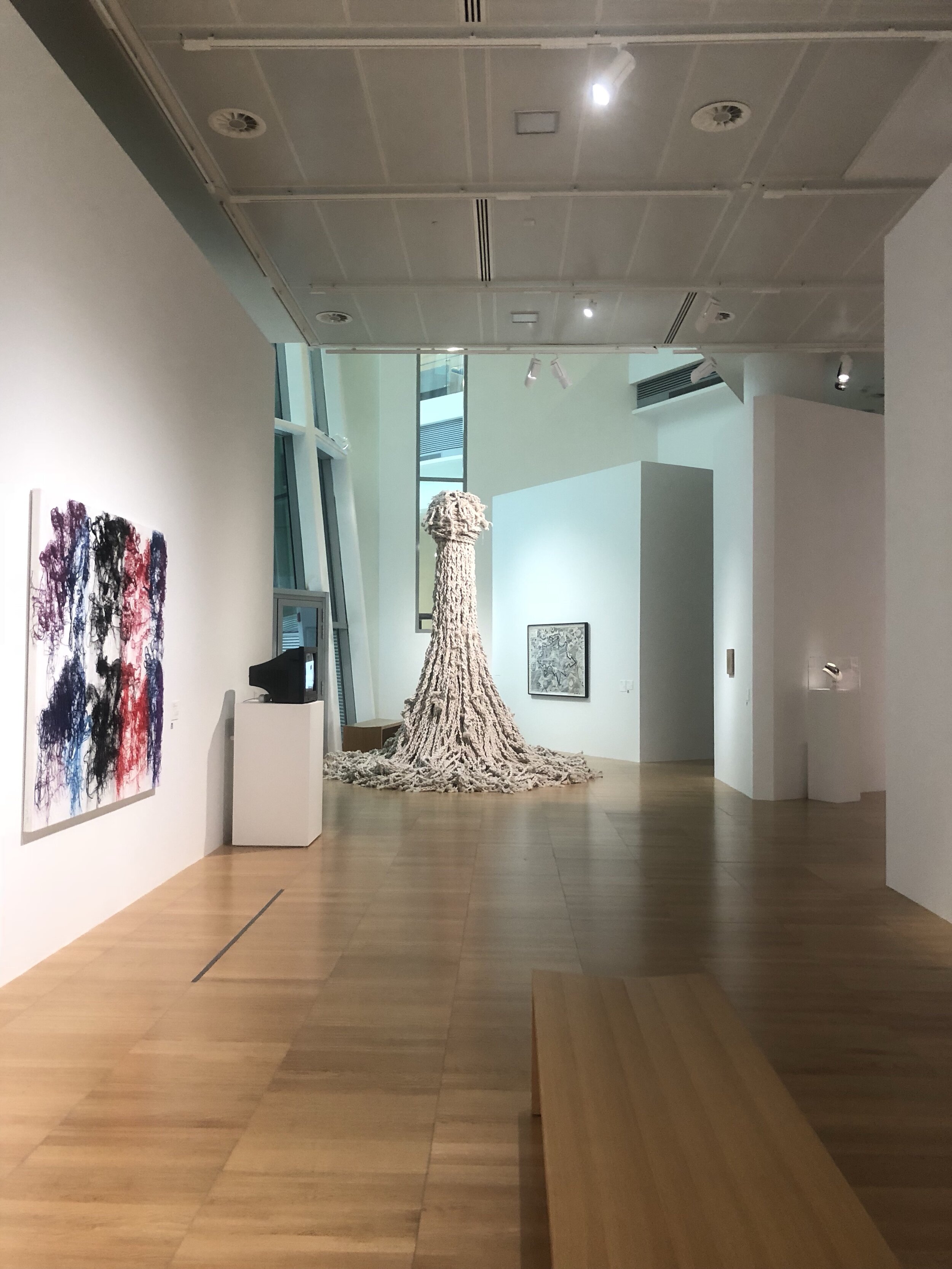
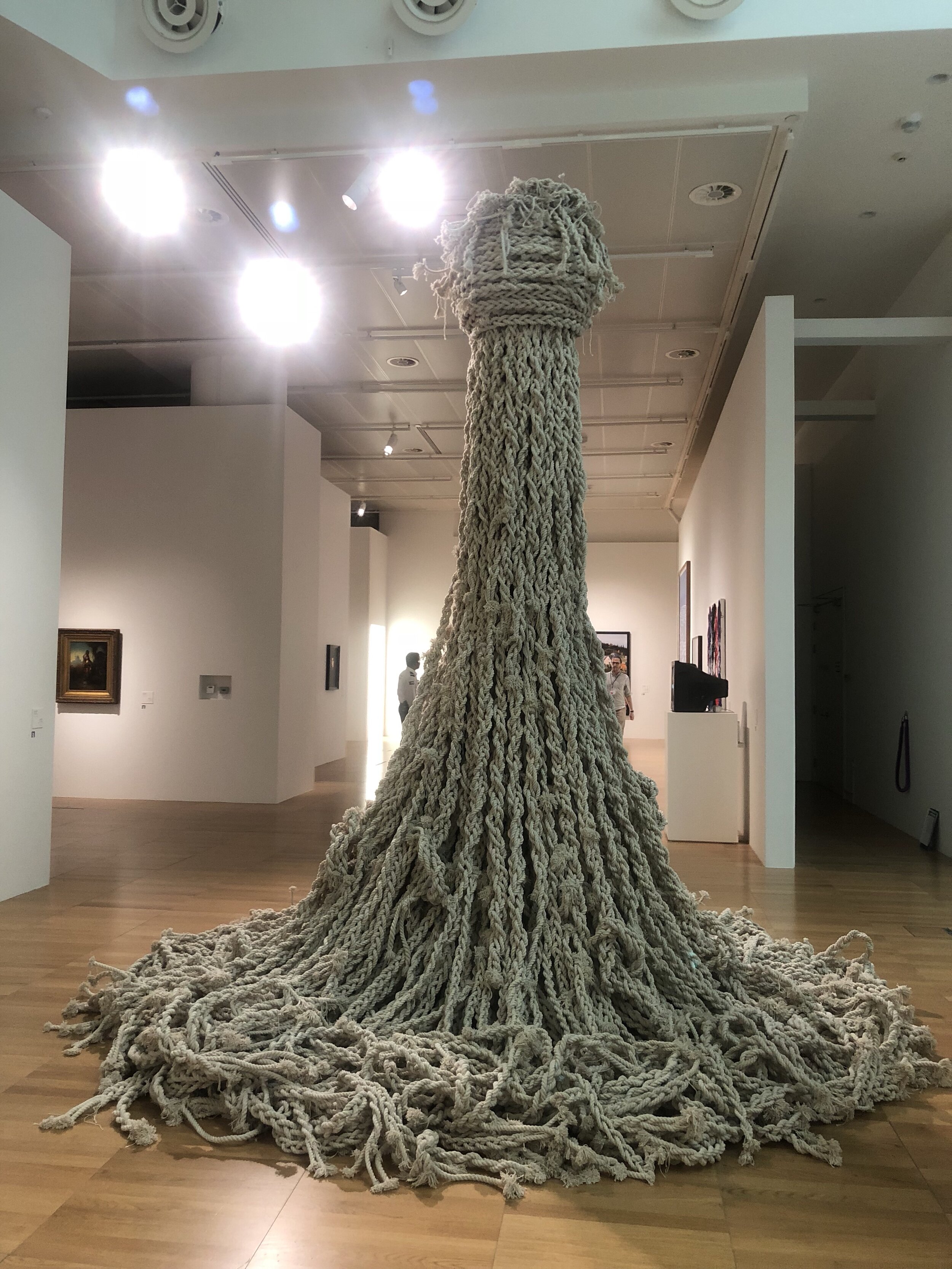
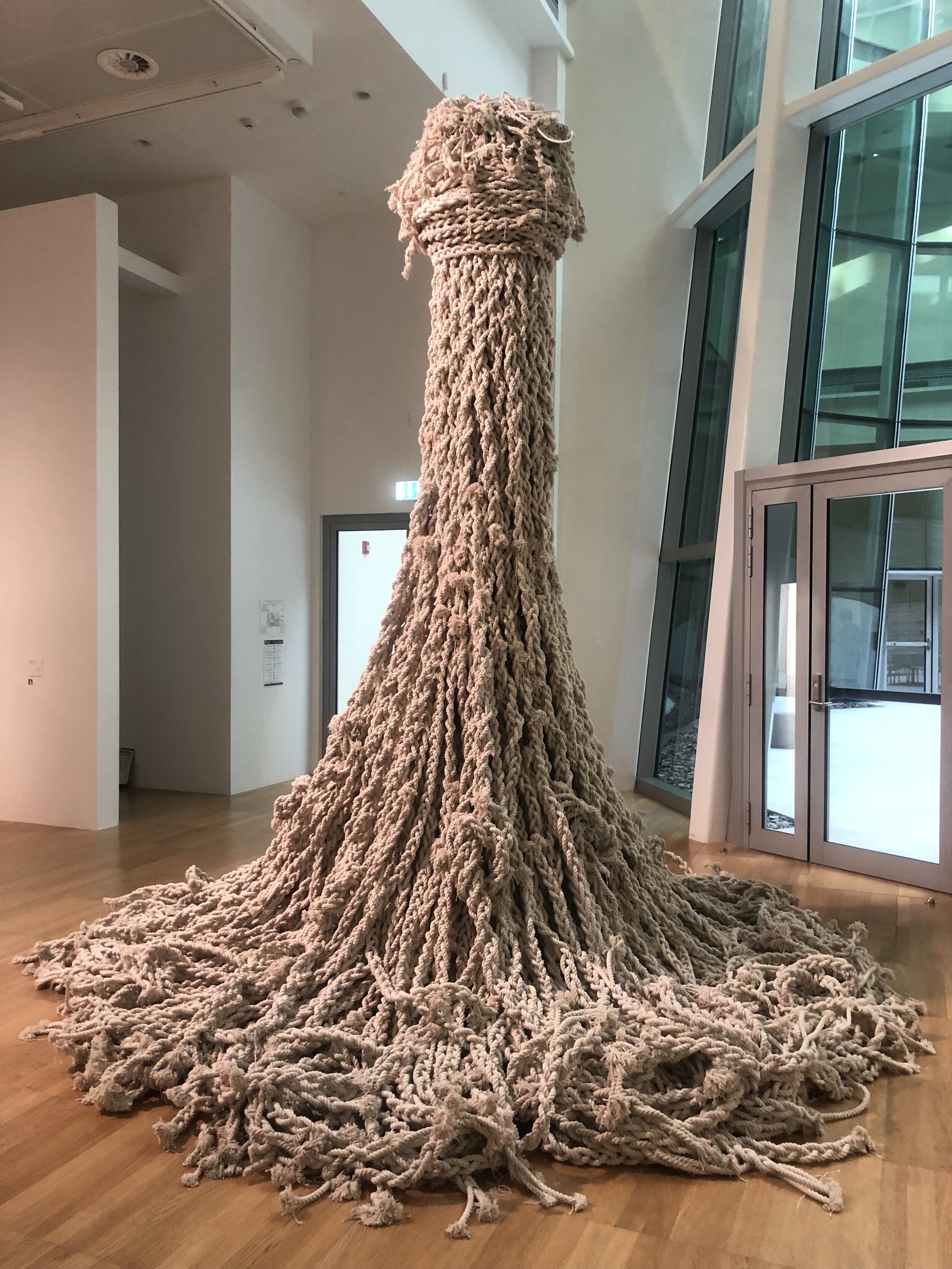
Hassan Sharif, Knots, 2012-2016, cotton rope and stainless steel, 380 x 350 cm (my photos of artwork)
Sharif fills the space - the opposite of how I'm told he was as a person. The rope and knots are so clear yet lost in mass. It was higher when I saw it last - it took up less floor space and it felt like you could walk in to it - this feels deflated, or maybe growing tired from moving from place to place.
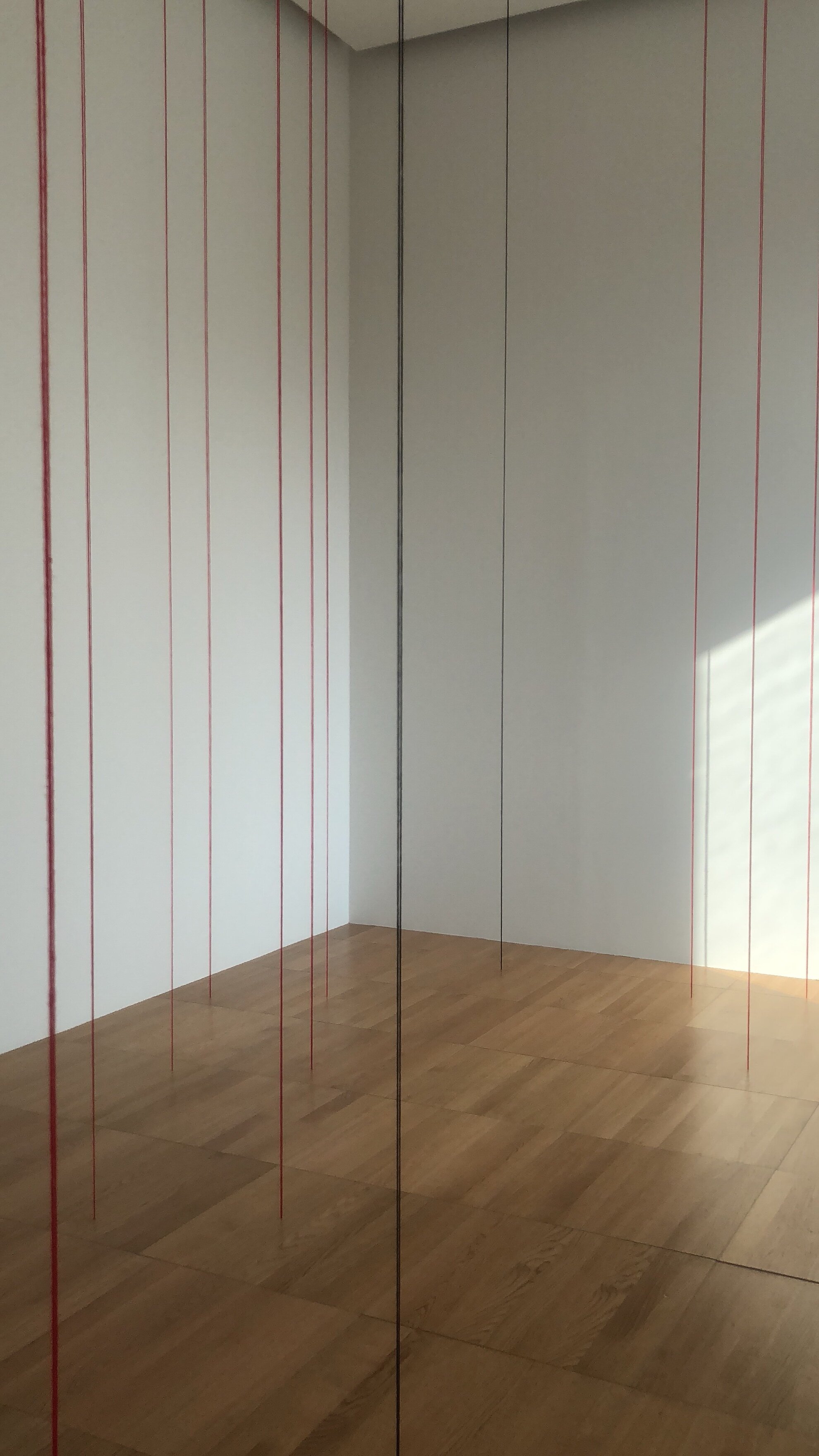
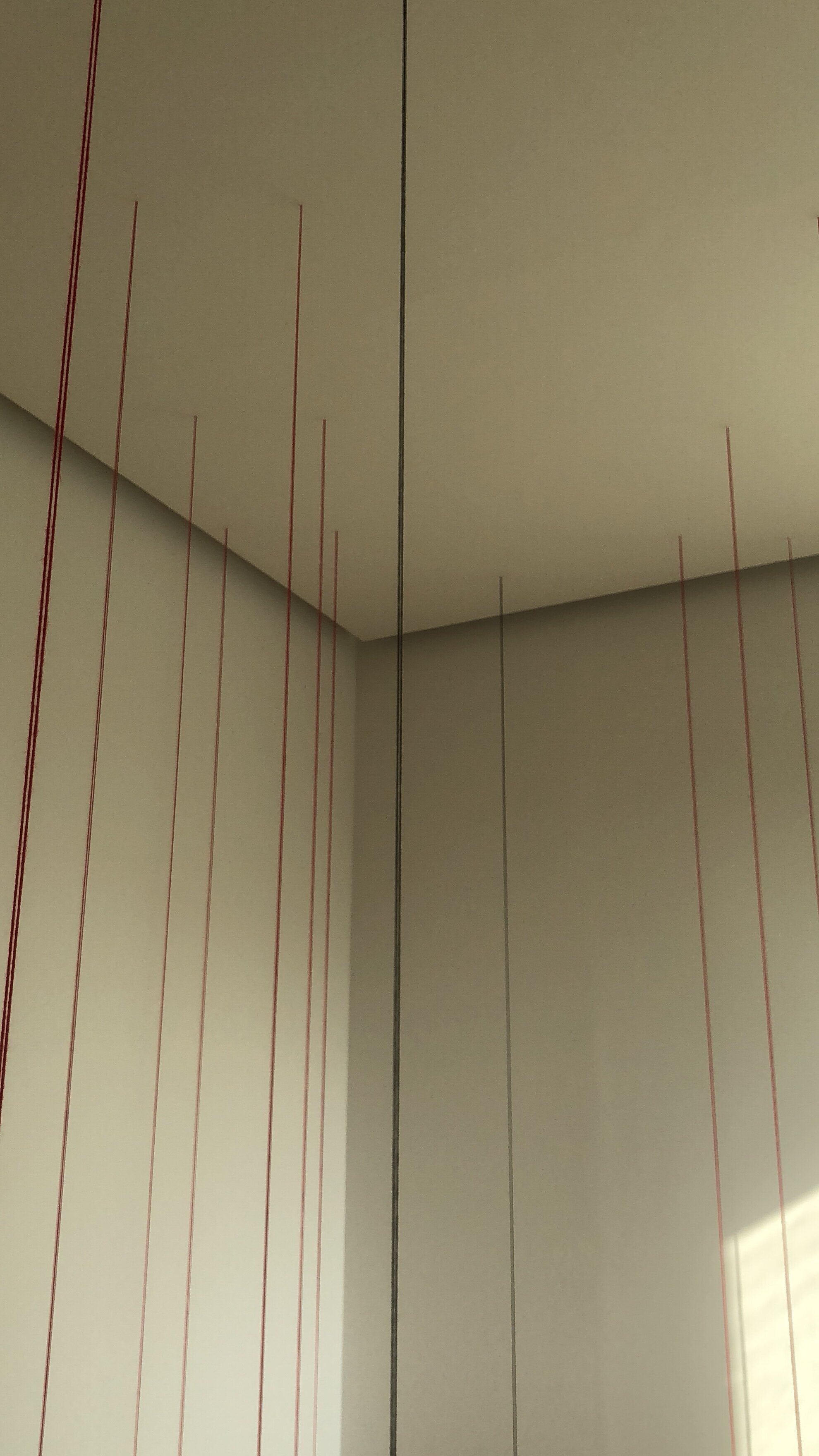
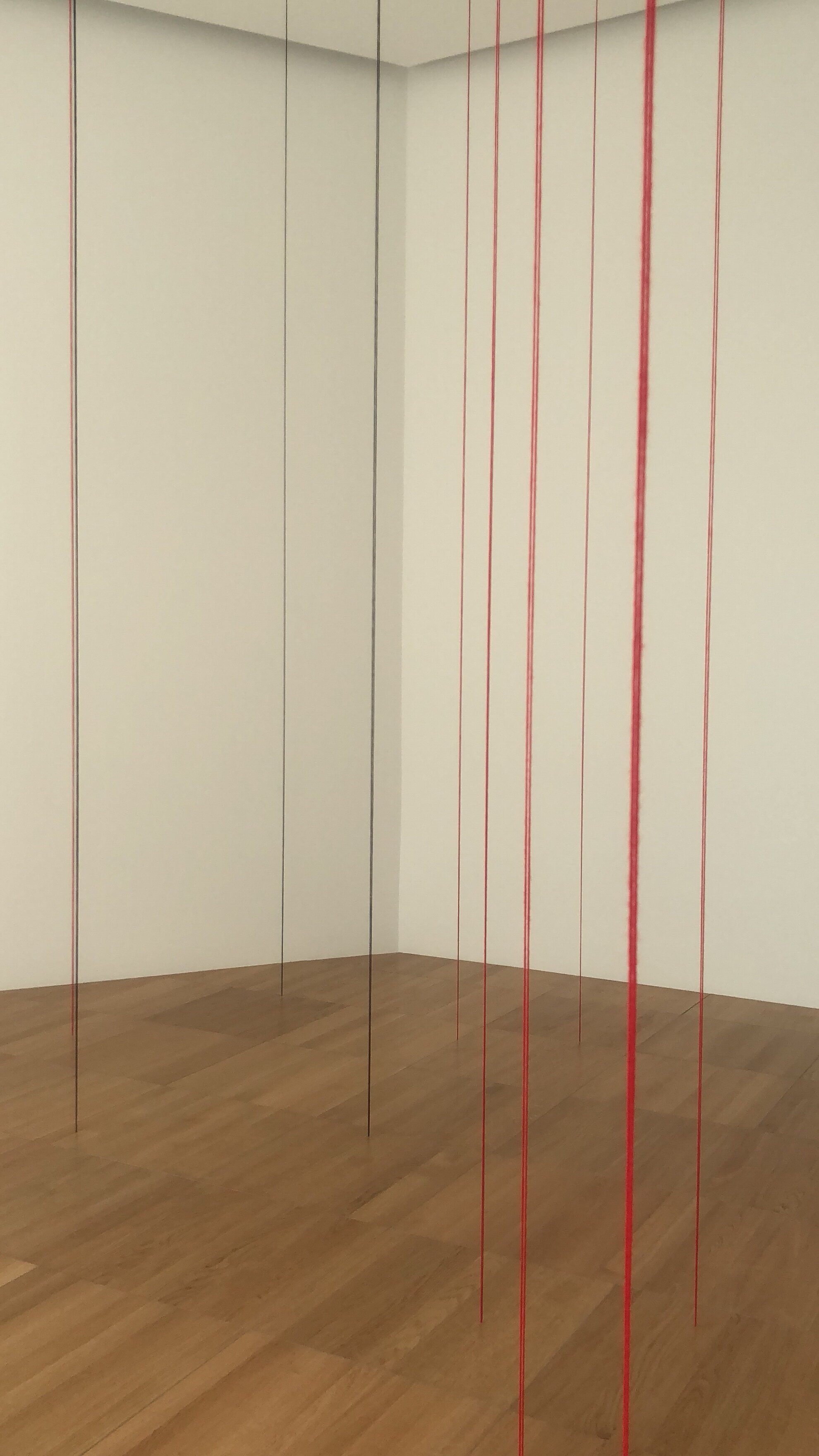
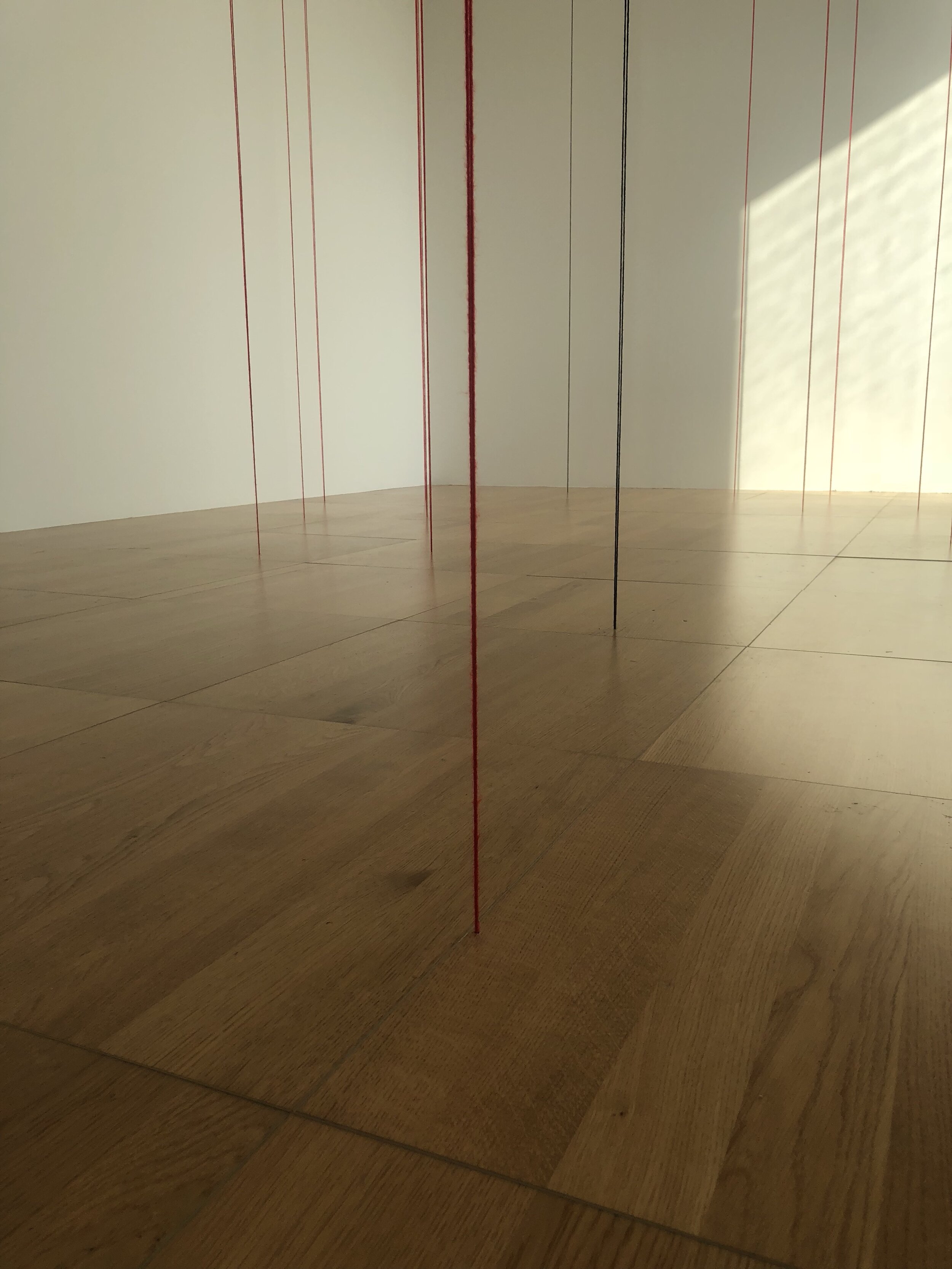
Fred Sandback, Untitled (Sculptural Study, Twenty-two-part Vertical Construction), 1991/2018, black and red acrylic yarn, dimensions variable (my photos of artwork)
I want to lie on the floor, I want to ping it and run about in them.
Not Pictured: Kim Tschang-Yeul - water drop -a painting and a reference - does the artist want you to look at both, are they the same - is one incidence and one action?
Not pictured: Gustav Metzger - Historic Photographs: To Crawl Into - Anschluss, Vienna, March 1983, 1996/2011 - the linen was so heavy, my shoulders ached from bearing the weight - the actual weight and the metaphoric weight - the women in the large photo are scrubbing the floor while children look on - I crawl on top of them struggling to lift the fabric to see them, I haven't seen them before, I don't know them but for a moment I'm with them, in a similar position but with the privilege of choice, of participation, rights - can I ever emphasise? do I need to? is the moment enough - a token -its history, past, I cannot change.





 I proceeded to punch embroider everyday for 10mins inside on of the squares, a couple of the day I didn't finish, the rest I had to stitch over as I was faster than expected.


 Once I had done the first 16days I began to unpick the work. This did not need a timer. I systematically unpicked each square carefully bundling up the yarn for display afterwards. This is in honour of Hassan Sharif's piece "Cotton" pictured below. Which is a video installation alongside the artefact of the lump of cotton her created.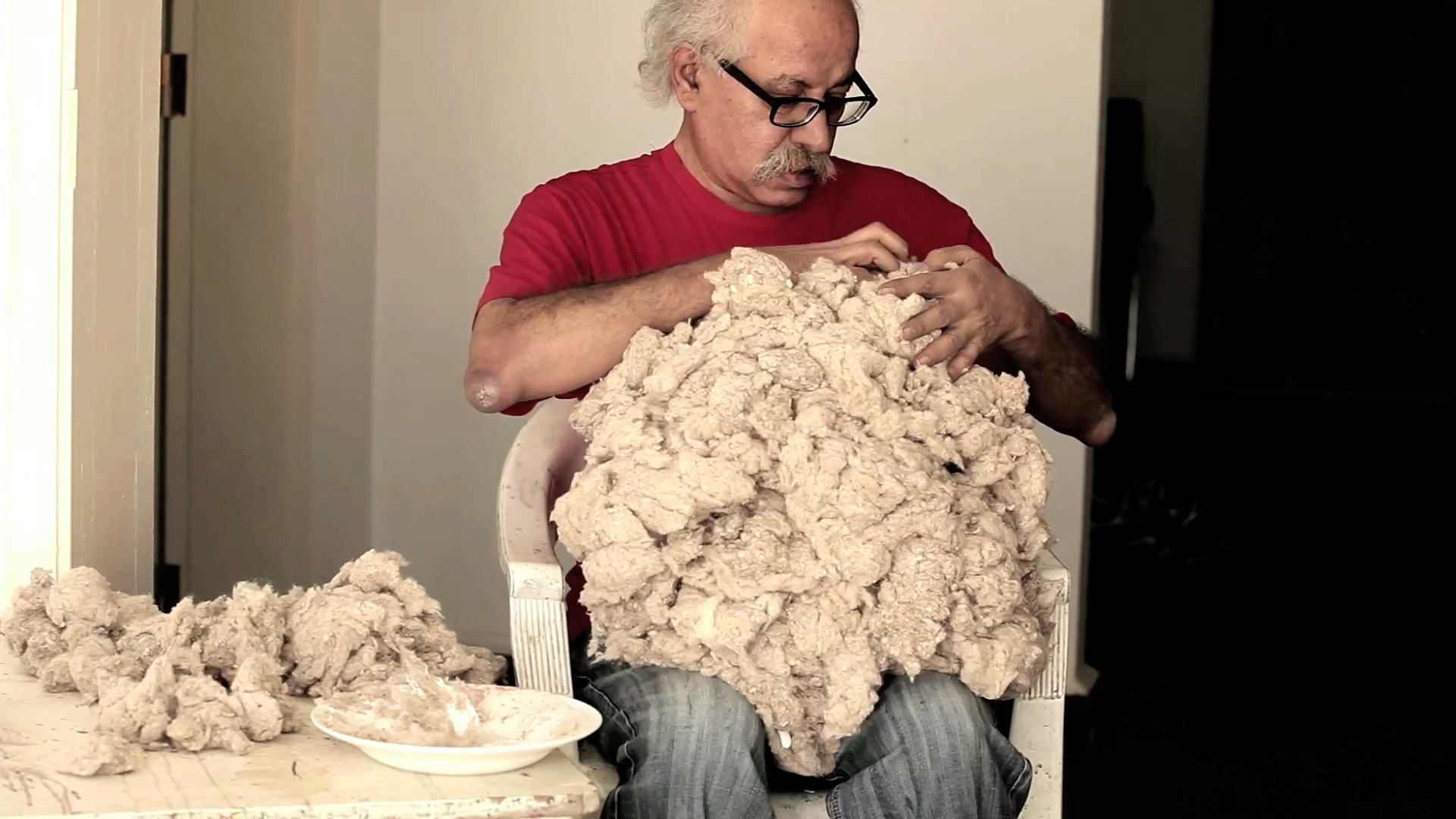


 The video would be displayed alongside the artefacts and played on a loop. It is 3:36 hr: mins long. I chose to leave it like this as the point of the use of the techniques was its rhythmic movement and sound. It is tedious to watch, mirroring the common thought fo the 'daily grind' but in its sum creates a textile piece. As the chaos ensues ans it comes apart a different, perhaps more aesthetically pleasing textiles arises.[vimeo 273833967 w=640 h=360]
 My initial batches were coarse and grey as I was using a substandard blender and the paper had a lot of printer ink on it. It was also heavily textured due to the fabric I was using to place it on. I replaced that and fixed the other teething problem and created some almost white paper. I was trying to maintain an element of transparency but this proved to be very difficult with the paper tearing and breaking up.
 Once I dry I did some ink experiments with the pieces. Because the paper doesn't go through any finishing processes it is absorbent and allows the ink to bleed through. I think this could be made a feature but where it absorbs too much ink it very quickly disintegrates.

 I next used threads in the process of papermaking, laying them on and in the paper solution as I was creating the sheets. This relies on the paper fibres to hold the thread in place and is not the most secure way of doing it. After a short time, the threads began to come away from the paper. I also sandwiched the threads between sheets but this rendered the paper very thick and the threads not as visible.


 I do really find something pleasing about the piece that created holes, this unperfect aspect in an art form that prides itself on perfection moves me back into the thinking of chaos and order.
 I did stitch a piece but it doesn't photograph well, this is a piece of Japanese paper that was also stitched. It holds the threads well whereas my handmade paper tore quickly and I abandoned stitching it further to save the piece. Perhaps the next point would be to continue until is does destroy itself and see what happens.

 Below the back can be seen, its relatively straight lines and the top is more chaotic.
 I am considering how this would work on a large scale where the height of the pile can be changed and the textures would highlight the geometric structure further.I also used crossstitch, and punch stitch to explore how these geometric can translate in to stitch.


 I found them frustrating. I longed for density in these pieces either by layering transparent fabric over each other or by building up textures and stitch density. There is a long way to go with the textile aspect of this exploration.